
How much time does your crew waste searching for a specific tool or trailer? Those minutes add up, turning into hours of lost productivity that can derail project timelines and eat into your profits. Improving your operational workflow means giving your team the information they need, right when they need it. By implementing equipment and asset tracking devices, you eliminate the guesswork and the frantic searching. You gain a clear, real-time view of your entire inventory, allowing you to dispatch assets efficiently and hold everyone accountable. This guide will walk you through the key features that turn a simple tracker into a powerful tool for operational excellence.
Key Takeaways
- Look Beyond the Hardware: A complete tracking solution pairs durable devices with powerful software. This integration is what provides real-time data, smart alerts, and geofencing for full visibility over your assets.
- Focus on Operational Gains: The real value of a tracker comes from improving your business. Use it to prevent theft, increase equipment utilization, and make informed decisions about maintenance and job site deployment.
- Select a Solution for Your Needs: Start by assessing your daily challenges and the equipment you use. Prioritizing essential features like battery life and durability helps you find a scalable system that fits your operation perfectly.
What to Look for in a Asset/Equipment Tracker
Choosing the right equipment tracker means looking for a complete system, not just a piece of hardware. You need a solution that is reliable, simple to deploy, and gives you the information you need to protect your assets. The best trackers combine durable hardware with powerful software, giving you a clear view of your entire inventory. As you evaluate your options, focus on the key features that deliver real value: compact and rugged hardware, long-lasting battery life, real-time data, and intelligent software alerts.
Meet Azuga's Asset & Equipment Tracking Solution
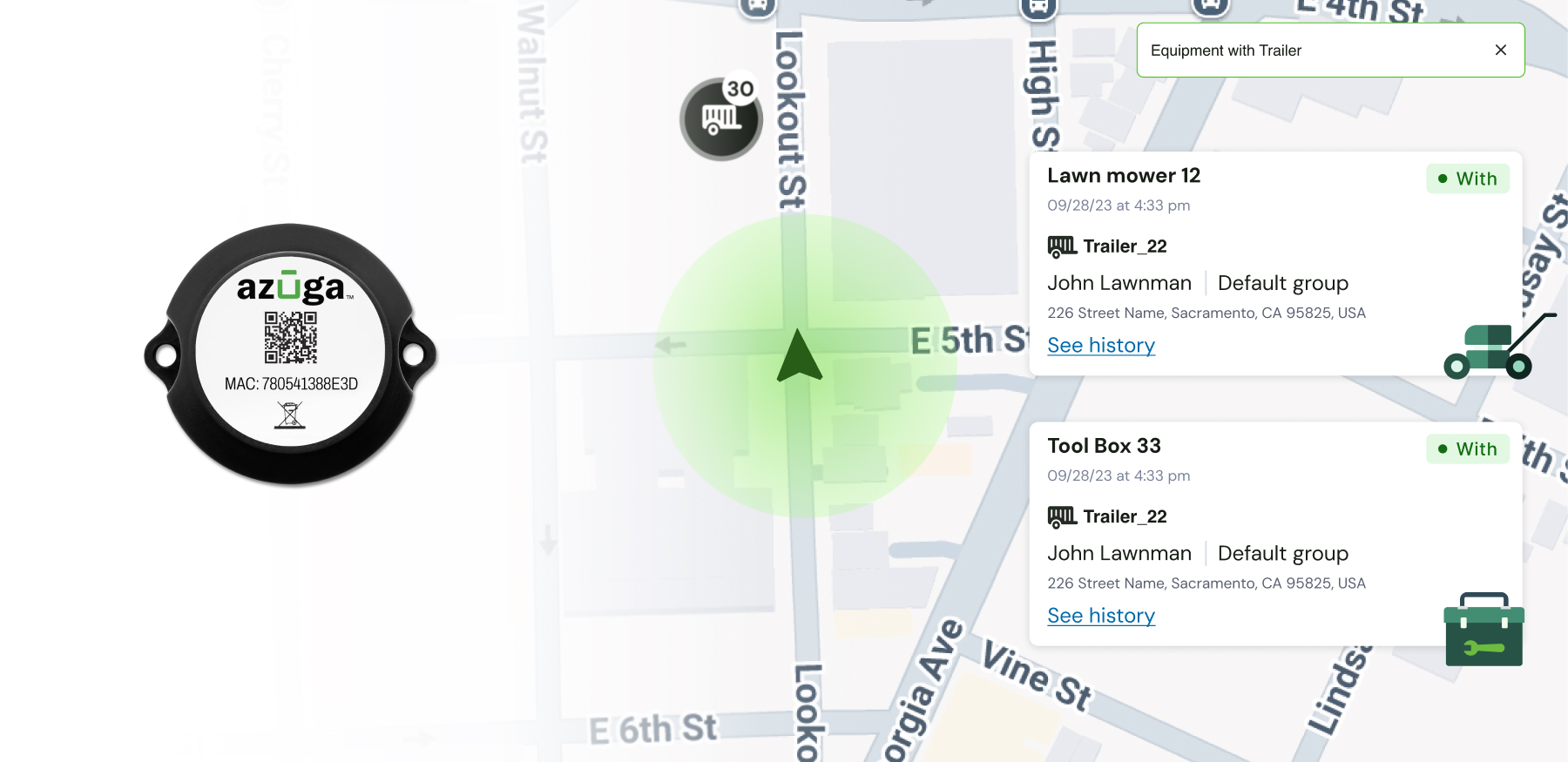
When you need a comprehensive system to protect and manage your assets, Azuga has you covered. Our equipment management & asset management solutions are designed to give you full visibility over every piece of equipment, from small tools to heavy machinery. We combine rugged tracking devices with an intuitive software platform, helping you reduce theft, improve utilization, and streamline your operations. It’s about more than just knowing where your assets are; it’s about making them work smarter for your business, ensuring accountability, and protecting your bottom line from preventable loss.
Compact, Durable Hardware
Your equipment operates in tough environments, and your tracker must be able to keep up. Look for hardware that is not only small enough to be concealed but also built to withstand dust, water, and vibrations. The best devices are ruggedized for real-world job site conditions. Many modern trackers are also designed for immediate use, meaning you can attach them to your equipment and get started without needing professional installation. This simplicity saves you valuable time and lets you quickly deploy your tracking solution across your entire inventory of assets.
Long-Lasting Battery Life
A tracker is only useful if it’s powered on. For equipment that might sit idle on a job site for weeks or even months, battery life is a critical feature. Some trackers can operate for years on a single charge, offering true "set-and-forget" monitoring. This is especially valuable for non-powered assets or rental fleets where frequent maintenance isn't practical. A long-lasting battery ensures you have continuous visibility without adding another task to your team’s busy schedule. This reliability is a cornerstone of effective asset management.
Real-Time Location Data
When a piece of equipment goes missing, you need to know its location now, not where it was yesterday. That’s why real-time location updates are non-negotiable. A reliable tracker provides instant, accurate GPS data, allowing you to see your asset’s precise location on a map at any moment. This capability is essential for theft recovery and for improving your daily operations. With real-time fleet tracking, you can quickly locate equipment for dispatch, verify asset locations for clients, and maintain a clear picture of your inventory across multiple job sites.
Powerful Software & Alerts
The tracking device is just one part of the system; the software is what turns location data into valuable business intelligence. A powerful platform lets you set up custom alerts, such as notifications for when an asset leaves a designated area (geofencing) or is used outside of work hours. You should be able to easily access reports on asset utilization and history. An intuitive fleet mobile app is also key, giving you the ability to monitor your equipment from anywhere, right from your phone. This is how you make data-driven decisions.
Key Features of the Best Equipment Trackers
When you’re ready to choose an equipment tracker, you’ll find a lot of options out there. To find the right fit for your business, you need to look past the surface and focus on the features that deliver real results. The best systems combine durable hardware with powerful software to give you a complete picture of your assets. Think of it as a toolkit: you need the right tools working together to get the job done.
A great equipment management solution provides more than just a dot on a map. It offers detailed insights that help you improve security, streamline maintenance, and maximize the use of every piece of equipment you own. From the physical device that withstands the elements to the software that sends you critical alerts, each feature plays a vital role. Let’s walk through the five key features that separate the best equipment trackers from the rest.
Accurate, Real-Time Tracking
Knowing where your equipment was yesterday isn’t enough. For effective management and security, you need accurate, real-time location data. The best trackers provide strong, dependable updates, so you can see precisely where your assets are at any given moment. This level of visibility is crucial for preventing theft and recovering stolen equipment quickly.
Beyond security, real-time fleet tracking helps you make smarter operational decisions. You can instantly verify if a piece of equipment is at the right job site, dispatch the nearest asset to a new task, and give clients accurate arrival times. This precision eliminates guesswork, improves accountability, and ensures your operations run smoothly and efficiently.
Reliable Battery Life and Power Options
An equipment tracker is only useful if it’s powered on. That’s why reliable battery life is a non-negotiable feature. For assets that don’t have their own power source, like trailers or containers, look for devices with long-lasting batteries. Some trackers can run for years on a single charge, making them a perfect "set-and-forget" solution for equipment that sits for long periods.
For powered assets like vehicles or heavy machinery, a hard-wired tracker is an excellent option. These devices connect directly to the equipment’s power source, so you never have to worry about a dead battery. This ensures continuous, uninterrupted tracking and gives you one less thing to manage.
Durable Hardware for Any Environment
Your equipment works in tough conditions, and your tracking devices should be able to handle it all. Whether it’s a dusty construction site, a rain-soaked field, or a bumpy road, the hardware needs to be rugged and resilient. Look for trackers that are weather-proof and built to withstand vibrations, extreme temperatures, and impacts.
Industrial-grade durability ensures your tracker will keep reporting day in and day out, no matter where your work takes you. A flimsy device that fails when exposed to the elements won’t provide the reliability you need. Investing in durable hardware means you can count on your tracking system to protect your valuable assets in any environment.
Smart Alerts and Geofencing
A great equipment tracker does more than just collect data; it gives you actionable information. Smart alerts and geofencing are two of the most powerful features for this. Geofencing allows you to create virtual boundaries around important locations, like job sites, storage yards, or office locations.
You can then set up instant alerts to be notified via text or email whenever an asset enters or leaves a geofenced area. You can also receive alerts for movement after work hours, which is a key tool for theft prevention. These notifications, often managed through a fleet mobile app, turn your tracking system into a proactive security guard for your equipment, giving you peace of mind.
Easy Installation and Use
You don’t have time to deal with complicated technology. The best equipment tracking devices are designed for straightforward installation, allowing you to get them up and running quickly without professional help. Whether it’s a simple magnetic attachment or a basic hard-wired connection, the setup process should be simple.
The same goes for the software. The platform should be intuitive and user-friendly, with a clear dashboard that makes it easy to view locations, run reports, and set up alerts. The goal is to spend less time figuring out the system and more time using its insights to improve your business operations.
How to Evaluate the ROI of an Equipment Tracker
Understanding the return on investment for an equipment tracker goes beyond the initial setup. The true value comes from how the device and its software improve your daily operations, protect your assets, and provide insights that lead to smarter business decisions. A great tracker pays for itself by reducing losses, improving productivity, and giving you a clear view of where your valuable equipment is and how it’s being used. It transforms a piece of hardware into a central part of your operational strategy.
To properly evaluate the ROI, you need to look at the complete picture. This includes the reliability of the hardware, the power of the software, and the quality of the support you receive. When you manage your equipment effectively, you can prevent theft, reduce downtime, and ensure your tools are always where they need to be. Think of it as an investment in operational excellence. The following points break down how to measure the real-world value a tracking solution brings to your business, helping you see the full impact on your efficiency and profitability.
Factor in Reliable Customer Support
When you choose an equipment tracking solution, you’re not just buying a device; you’re partnering with a provider. Excellent customer support is a huge part of that partnership and a key factor in your ROI. If you run into an issue during installation or have a question about a feature, a responsive and knowledgeable support team can save you hours of frustration and downtime. Think about the time and resources you save when you can get a quick answer and get back to work. A reliable provider offers more than just hardware; they provide a service that helps you succeed.
Measure Gains in Efficiency and Security
The most direct returns from an equipment tracker come from improved efficiency and security. Imagine eliminating the time your crew spends searching for a specific tool on a busy job site. With real-time location data, they can find what they need and get to work. For assets that sit idle for long periods, a tracker with a long-lasting battery offers "set-and-forget monitoring," giving you peace of mind without constant maintenance. This enhanced security helps you prevent theft and quickly recover any misplaced or stolen assets, avoiding the massive headache and replacement expenses that come with losing high-value equipment.
Use Actionable Data and Reporting
The data your equipment tracker collects is where you can find significant long-term value. The best tracking solutions pair durable hardware with powerful software that allows you to "efficiently monitor your equipment." This isn't just about seeing a dot on a map. It's about using reports on engine hours, location history, and usage patterns to make informed decisions. You can identify underutilized assets, schedule preventative maintenance based on actual use, and optimize how you deploy equipment across different job sites. This level of insight helps you manage your resources more effectively and improve your bottom line.
Which Industries Benefit Most from Equipment Tracking?
While nearly any business with mobile assets can find value in equipment tracking, some industries see a more immediate and profound impact. Operations that rely on high-value, mobile equipment spread across multiple sites are prime candidates for this technology. Gaining real-time visibility into your assets is the first step toward better security, improved efficiency, and greater accountability.
From sprawling construction sites to vast agricultural fields, knowing where your equipment is and how it’s being used can completely change how you manage your operations. Let’s look at a few key sectors that get the most out of a robust equipment management system.
Construction: Secure High-Value Assets on Job Sites
Construction sites are dynamic environments, often with multiple teams and subcontractors coming and going. This makes securing expensive machinery a major challenge. Equipment tracking provides a direct line of sight to your most valuable assets, from large-scale machines and delivery trucks to smaller, portable tools. With durable, weather-proof trackers, you can monitor everything, whether it’s hard-wired into a powered vehicle or running on a long-life battery.
This constant visibility is your best defense against theft and unauthorized use. You can set up geofences around job sites and receive instant alerts if equipment moves outside of designated hours. This not only helps in quick recovery but also provides accurate usage data for billing and project management, ensuring your assets are always working for you.
Logistics: Monitor Shipments and Streamline Operations
In the logistics industry, efficiency is everything. Misplaced trailers or containers can lead to significant delays and disrupt the entire supply chain. Equipment trackers give you the power to monitor trailers, intermodal containers, and other shipping assets, whether they are connected to a truck or sitting in a yard. This insight is critical for streamlining operations and keeping everything moving on schedule.
With the right asset management solution, you can quickly locate any asset, reduce the time drivers spend searching for trailers, and optimize yard management. Knowing exactly where your equipment is at all times allows you to provide customers with accurate ETAs, prevent detention fees, and gain valuable data to improve your overall workflow.
Agriculture: Manage Machinery Across Vast Areas
Farming operations often cover thousands of acres, making it difficult to keep tabs on essential machinery like tractors, combines, and irrigation systems. Agricultural equipment can also sit idle for long periods between seasons, which makes a tracker with a long battery life essential for set-and-forget monitoring. You can attach a device and have peace of mind for years without needing to recharge it.
This technology allows farm managers to deploy machinery efficiently during critical planting and harvesting windows. It also helps with planning preventative maintenance based on actual engine hours and ensures that equipment is secure during the off-season. By tracking your agricultural assets, you can optimize fuel consumption and ensure every piece of machinery is ready when you need it most.
Field Services: Increase Asset Utilization and Accountability
For field service businesses like HVAC, plumbing, or landscaping, success depends on having the right tools at the right job site. Losing track of generators, trailers, or specialized diagnostic tools can bring work to a halt. Reliable and accurate equipment tracking gives managers a real-time inventory of their assets in the field, increasing both utilization and accountability.
You can ensure that expensive equipment isn’t left behind at a job site or sitting unused when it’s needed elsewhere. This visibility helps you dispatch technicians and their tools more effectively and provides a clear record of asset usage. It also supports better scheduled maintenance, as you can track engine hours and service needs proactively, extending the life of your valuable equipment.
How to Choose the Right Equipment Tracking Device
Selecting the right equipment tracker isn't just about picking a device off a list. It’s about finding a solution that fits seamlessly into your daily operations and solves your specific challenges. The best choice for a construction company securing heavy machinery on a remote job site will be different from what a landscaping business needs to manage a fleet of mowers and trailers. The key is to find that perfect balance of reliability, battery life, and functionality that aligns with your operational goals.
Think of it as a partnership. The hardware is important, but the software and support behind it are what turn data into decisions. A great tracker provides more than just a dot on a map; it offers insights into how your assets are being used, helps you schedule maintenance, and alerts you to potential theft or unauthorized use. This comprehensive view allows you to protect your investments and improve efficiency across the board. Before you decide, take a step back to map out your needs, identify your must-have features, and think about your long-term goals. This approach ensures you choose a system that not only works for you today but can also grow with your business tomorrow.
Assess Your Unique Operational Needs
Start by looking at your own operations. What specific problems are you trying to solve? Are you focused on preventing theft of high-value assets, improving utilization rates for rented equipment, or streamlining maintenance schedules? Make a list of the equipment you need to track and the environments they operate in. A tracker for a generator that stays on one site for months has different requirements than one for a tool that moves between multiple job sites each day. Understanding your day-to-day challenges will help you find a tailored equipment management solution that truly makes a difference.
Prioritize Your Must-Have Features
Once you know your needs, you can create a checklist of essential features. For most businesses, this list starts with the basics: accurate location tracking and long battery life. The best small trackers combine a solid battery, precise tracking, and a durable build, all in a compact size you barely notice. Consider what other features are non-negotiable for you. Do you need geofencing to create virtual boundaries around job sites? Are instant alerts for unauthorized movement critical? Prioritizing your must-haves will help you filter through the options and focus on the asset management tools that will have the biggest impact on your business.
Select a Scalable and Future-Proof Solution
Your business is going to grow, and your tracking solution should be ready to grow with it. Look for a system that is both scalable and flexible. You can efficiently monitor your equipment by pairing the right GPS tracking device with high-quality, easy-to-use software. A powerful fleet tracking platform provides comprehensive reports, integrates with other business tools, and offers a mobile app for managing assets on the go. Choosing a forward-thinking partner ensures your investment continues to provide value as your fleet expands and your operational needs evolve.
Related Articles
- Asset Tracking - Re-chargeable & Long Life Asset Trackers | Azuga
- How to Use GPS Equipment Tracking to Protect Your Assets | Azuga
- Asset Tracking Solution - Long Life- Re-chargeable Trackers | Azuga
- How to Monitor Equipment with Asset Tracking Software | Azuga
- Long Life Asset Tracker - Rechargeable Asset Tracker | Azuga
Frequently Asked Questions
What's the difference between a vehicle tracker and an equipment tracker? Think of it this way: a vehicle tracker is designed for things that move on their own, like trucks and cars. It often connects to the vehicle's engine to give you data like speed and ignition status. An equipment tracker is more versatile. It's perfect for assets that don't have their own power source, such as trailers, containers, or generators, and often runs on a long-lasting battery. Both give you location data, but they are tailored for different types of assets.
How does geofencing actually help my business day-to-day? Geofencing is a simple but powerful tool. You use the software to draw a virtual boundary on a map around a job site, your office, or a storage yard. Then, you can set up an automatic alert that sends you a text or email whenever a piece of equipment enters or leaves that area. This is incredibly useful for confirming that an asset has arrived at a job or for getting an immediate notification if something moves after hours, which is a great tool for theft prevention.
Can these trackers tell me more than just an asset's location? Yes, absolutely. While location is the primary function, a comprehensive tracking system gives you much more insight. For your powered equipment, you can monitor engine hours, which helps you schedule maintenance based on actual usage instead of just a calendar guess. You can also see utilization reports to identify which assets are constantly in use and which are sitting idle, helping you manage your inventory more effectively.
How do I choose between a battery-powered and a hard-wired tracker? Your choice really depends on the asset you need to monitor. Hard-wired trackers are ideal for equipment that has its own engine or power source, like a backhoe or a work truck. They draw power directly from the asset, so you get continuous, uninterrupted tracking. Battery-powered trackers are the perfect solution for non-powered equipment, like trailers or portable tools. They have incredibly long battery lives, so you can attach one and trust it to report for years.
How complicated is the installation process for these devices? Getting started is surprisingly straightforward. Most modern tracking devices are designed for easy, do-it-yourself installation. Battery-powered units can often be attached in just a few minutes using heavy-duty magnets or simple screws. The software side is just as user-friendly. Once the device is active, you can log into a web platform or mobile app and begin monitoring your equipment right away.