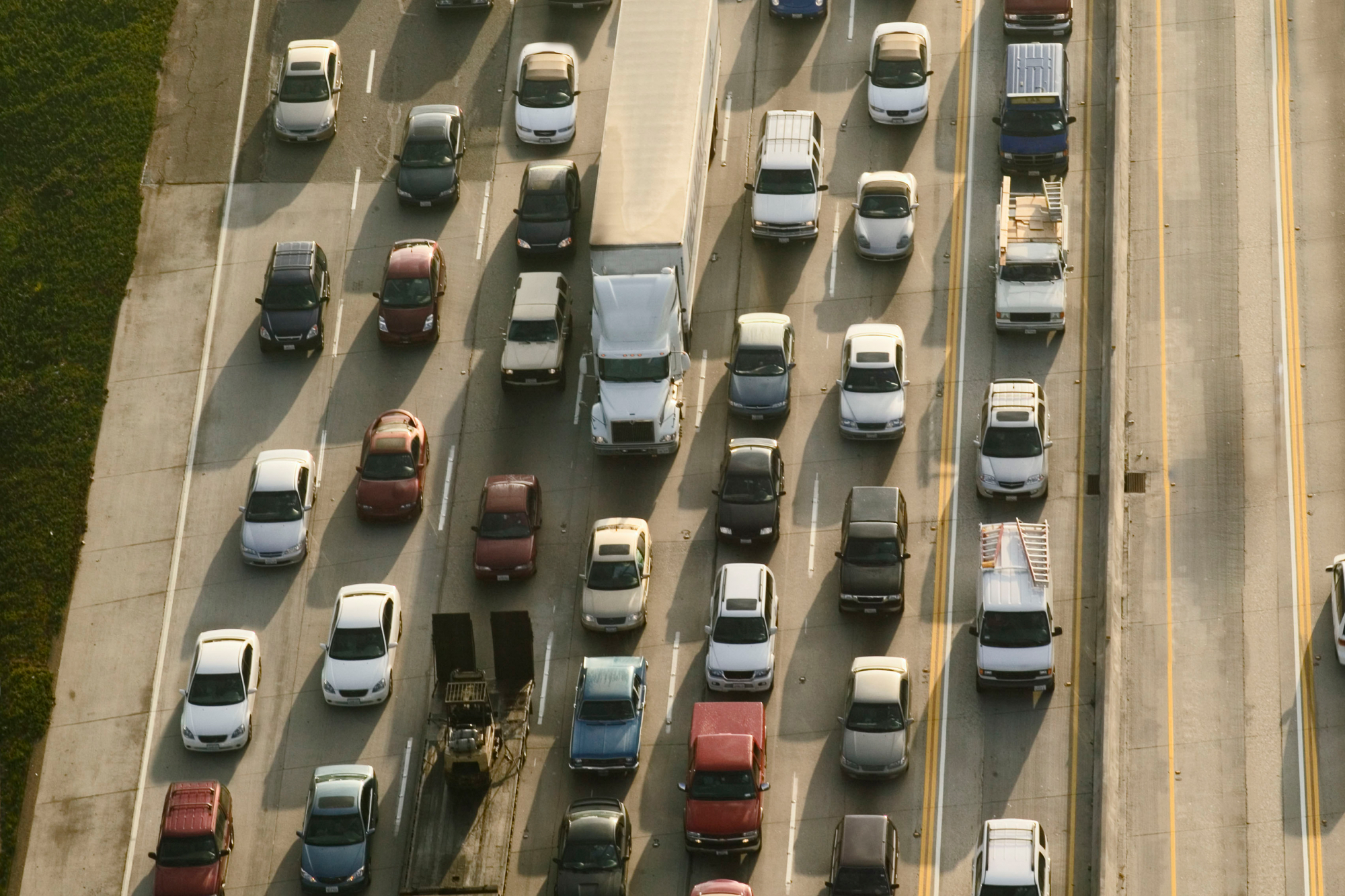
While many of us are staying home, the world outside hasn't stopped. That package on your doorstep? The food on grocery store shelves? It doesn't get there by magic. It's all thanks to an army of people who can't work from home. These are the faces of America working amidst COVID-19—the drivers, technicians, and public safety officers keeping our communities going. They face unique challenges every day to serve us. It's time we look beyond the hospital walls and acknowledge the critical work these unsung heroes do.
Watch any news program and you’ll likely see a callout thanking those on the front lines for serving their communities amidst the uncertainty of a global pandemic. Most often they’re speaking of doctors and nurses. Sometimes you’ll also hear a thank you for grocery store employees. We certainly are grateful for these selfless individuals, and want to show our appreciation, but we rarely get to see the rest of the picture.
The truth is that there are a number of industries that have been labeled as “essential.” These essential businesses moving forward during a time of need. Their people are still hard at work, sometimes even working extra hours at great personal danger for contracting the virus. We want to take a moment to thank these unsung heroes who are pitching in to ensure we all can make it through this crisis with as much normalcy as possible, under the circumstances.
The Unprecedented Shift in America's Workforce
The past few years have reshaped how, where, and why we work. The pandemic acted as a catalyst, accelerating trends and creating new challenges that businesses are still adapting to today. From sudden economic shocks to a fundamental rethinking of the workplace itself, the American workforce has undergone a transformation that will have lasting effects. Understanding these shifts is the first step for any business leader looking to build a resilient and thriving team for the future. This period has tested the limits of businesses large and small, forcing a reevaluation of everything from daily operations to long-term strategy.
Navigating Economic Turbulence
The economic landscape changed almost overnight, creating a volatile environment for businesses across the country. The initial downturn was sharp and severe, followed by a recovery that was uneven and brought its own set of challenges. For many companies, especially smaller ones, this period was a true test of survival, forcing them to adapt quickly to new market realities. The ripple effects of this turbulence are still being felt, influencing hiring, supply chains, and overall business strategy in profound ways.
The Initial Shock and Rapid Rebound
The initial economic impact was staggering. According to the U.S. Bureau of Labor Statistics, "The COVID-19 pandemic caused the biggest job losses since World War II. More than twice as many jobs were lost in March and April 2020 than during the entire Great Recession (2007–2009)." This sudden halt to economic activity created immense uncertainty. However, the rebound in many sectors was surprisingly swift, though it created a new set of pressures on businesses trying to scale back up, rehire staff, and meet fluctuating demand in a completely new environment.
The Disproportionate Effect on Small Businesses
While large corporations had resources to weather the storm, small businesses faced a much tougher battle. The U.S. Bureau of Labor Statistics reported that from February to April 2020, there was a 22% drop in active business owners, with "Black, Latin-American, and immigrant business owners...hit especially hard." This highlights the vulnerability of the small business community, which forms the backbone of our economy. For these entrepreneurs, the challenge wasn't just about staying profitable; it was about keeping their doors open and supporting their employees through an unprecedented crisis.
The Great Relocation: From Office to Home
One of the most visible changes was the mass exodus from traditional office spaces. What started as a temporary safety measure quickly evolved into a long-term reevaluation of where work gets done. This "Great Relocation" has permanently altered employee expectations and forced companies to rethink their approach to collaboration, culture, and management. While offering new flexibility, it also introduced a new set of complexities for keeping teams connected and productive when they are no longer sharing the same physical space.
A New Standard for Flexibility
The nine-to-five office routine is no longer the default for many. Gallup research shows a dramatic shift: "Before the pandemic (2019), most remote-capable employees (60%) worked only in the office. Only 8% worked fully from home." Today, that picture is completely different, with 55% working a hybrid schedule and 26% working fully from home. This new standard of flexibility has become a key factor in attracting and retaining talent, forcing companies to invest in the technology and processes needed to support a distributed workforce effectively.
Challenges of a Dispersed Workforce
This newfound flexibility isn't without its difficulties. Managing a team you don't see every day requires a different skill set and better tools. Gallup found that "employee engagement has dropped to a 10-year low by 2024," citing a key reason: "fewer employees know what is expected of them at work." For fleet-based businesses, ensuring drivers and field staff feel connected and clear on their tasks is crucial. Tools like the Azuga Fleet Mobile App help bridge this gap by providing clear communication and task management, keeping everyone aligned no matter where they are.
Not All Industries Were Affected Equally
The pandemic's impact was not uniform across the economy. While some sectors faced near-total shutdowns, others experienced explosive growth as consumer behavior and needs shifted dramatically. This divergence created a K-shaped recovery, where different parts of the economy moved in opposite directions. Understanding which industries thrived and which struggled provides insight into the broader economic trends that continue to shape the business landscape and the demand for essential services.
Hardest-Hit Sectors
Industries that rely on in-person interaction were hit the hardest. The U.S. Bureau of Labor Statistics noted that "job losses were highest in industries like restaurants, hotels, and entertainment." These sectors often employ younger, less-educated workers, and the downturn exacerbated existing inequalities. The slow and often uncertain recovery in these areas has had long-lasting effects on local economies and the individuals who depend on these jobs for their livelihood, highlighting the fragility of certain parts of our service economy.
Sectors That Saw Growth
On the other hand, some industries saw unprecedented demand. As people stayed home, the need for delivery and logistics services soared. According to the NAHB, "transportation and warehousing grew significantly, reaching 117% of its 2020 job level." This boom put immense pressure on fleets to become more efficient and reliable. Companies in these sectors turned to solutions for route optimization and real-time fleet tracking to manage the surge in demand, scale their operations, and keep essential goods moving across the country.
Rethinking Workplace Wellbeing and Culture
Beyond the economic and logistical shifts, the pandemic forced a deeper conversation about the human side of work. The stress, uncertainty, and isolation of the past few years have taken a toll on employees, leading to widespread burnout and a reevaluation of what they want from their jobs. As a result, companies are now placing a greater emphasis on mental health, employee engagement, and building a supportive culture that prioritizes the wellbeing of their people.
The Decline in Employee Engagement
A concerning trend has been the growing disconnect between employees and their employers. Gallup reports that "fewer employees feel connected to their company's mission or purpose. Only 30% feel this connection, a record low." This disengagement can lead to lower productivity and higher turnover. To counter this, businesses are looking for ways to recognize and reward their teams. Programs that celebrate positive contributions, like Azuga's Driver Rewards, can help rebuild that connection by acknowledging hard work and reinforcing safe, efficient habits.
The Mental Health and Burnout Crisis
The strain on employees has been immense, leading to a decline in overall wellbeing. Gallup's research is stark, showing that "employee happiness and life satisfaction have steadily dropped since 2020, reaching a record low in 2024." This burnout crisis makes it essential for employers to create a safer, less stressful work environment. For fleets, this means prioritizing driver safety with tools that reduce risks on the road and provide peace of mind, ultimately contributing to a healthier and more sustainable work culture for everyone.
How Truckers Keep America Moving
While we all know that grocery stores are still open during the pandemic, we also need to consider the supply chain that keeps essential goods on the shelves, as much as possible. Without America’s trucking industry, we’d be completely out of food, medicine, and other necessities. Fortunately, truckers are on the job and on the roads.
Our truckers are vital to the survival of the country. In addition to delivering groceries, they’re moving medical equipment and that all-important personal protective equipment (PPE) that hospitals are clamoring for. They’re also transporting the paper goods and cleaning supplies we all need to keep our homes safe and clean.
Unfortunately, our nation’s network of truckers are facing some novel difficulties of their own. In many areas truck stops and restaurants have been shut down. This makes it difficult for long haul truckers to find meals when they’re used to just stopping for a quick bite on the road. As these hardworking men and women don’t have sinks available for handwashing, they rely on hand sanitizer to protect themselves— ask anyone who’s tried to pick up a bottle of that lately just how easy it is to come by.
Delivering More Than Just Packages
Business is booming for delivery drivers. Since we’re all stuck at home and trying to maintain social distance, more people than ever are ordering groceries online and getting their food and other necessities delivered to their doorstep. And that’s not to mention all the online shopping we’re doing while we can’t browse our favorite local boutiques.
Companies like Shipt, Instacart, and DoorDash are growing their workforce by leaps and bounds. Online retailers are selling out of all sorts of products, leading to more deliveries for USPS, FedEx, and UPS (not to mention Amazon’s own fleet of Prime-branded delivery vans). And in some places, like NYC, they’re even pulling in delivery drivers from other industries.
We owe these dedicated delivery drivers our gratitude, and if you’re receiving packages, why not give your driver a thank you in the form of an extra tip? Better yetr, offer one of those extra bottles of hand sanitizer you’ve got stored away or maybe some disinfectant wipes for their car.
On the Front Lines of Public Safety
While the good people of America are sheltering in place and avoiding public gatherings, there are those that might be using this pandemic to target empty businesses for looting. There are also scam artists targeting a stressed out and fearful public with fraudulent claims and false promises.
The guy who says he can come to your house to swab you for COVID-19 isn’t really testing you for anything—other than your ability to spot a scam. And those miracle cures and preventative measures that you’ve seen online? They’re often useless, and in some cases, even harmful. There are a number of versions of COVID fraud being perpetrated against innocent people everywhere, so stay aware and informed to avoid falling victim.
In the face of these issues, there is good news: our law enforcement and security personnel are still hard at work, protecting our homes, businesses, and communities from those who would seek to do us harm. As always, we thank the brave men and women who keep us safe, even in the midst of an epidemic.
Keeping Homes Safe and Functional
Due to the pandemic, everyone in the family is home, 24 hours a day, 7 days a week. That means a lot more wear and tear on your home’s vital systems.The toilet paper shortage may encourage people to flush things they normally wouldn’t, resulting in backups and plumbing issues that require the help of an expert. Your HVAC system may be taxed as well; there are near-record high temps in the South while parts of the North face snow storms, making it essential to have working heating and cooling.
Fortunately, plumbing and HVAC workers are considered essential, so they’re still on the job, ready to help. When the plan to use a sawed-in-half roll of paper towels as makeshift toilet paper backfires, they’re there to fix the pipes. And when your air conditioner breathes its last breath just as temps soar into the 90s, you won’t be stuck with the heat for long. Be sure to give these pros a big thank you if you find you need to call on them. After all, they’re risking exposure and the health of their family members to help you and yours.
Protecting Public Health, One Visit at a Time
Oddly enough, bugs and vermin don’t seem to care about social distancing. Termites, ants, spiders, rodents, and other unwanted guests may be making your home their own. But you don’t have to just live with it until the crisis passes.
Pest control companies across the country are still open for business. They’re taking extra protective measures to ensure they’re not bringing the virus into your home. In many cases, they can even treat problems from the outside, allowing you peace of mind and clearing out any critters that may be bugging you— no pun intended. Keep that appointment for your scheduled pest control visit, and don’t be afraid to call pest control if you find something other than your family is sheltering in your home. Just be sure to thank your pest control tech for their hard work.
Fueling the Nation's Essential Services
Yes, we still need the oil and gas industry during an outbreak. And this industry is facing their own troubles, with an oil price war that kicked off just as the virus began to spread. Yet we still need to heat our homes, put gas in our cars and trucks, and manufacture all of those products we use every day.
Travel restrictions and slumping demand are making oil and gas companies tighten their belts even further than the price war would have. Around the world, demand has dropped in a way that can’t be ignored. And yet, these companies continue to provide us with the fuel we need to keep America running.
Keeping America Connected
So many of us are working from home these days and it’s no wonder telecom and utility companies are seeing an increase in use. When both parents are videoconferencing with their respective workplaces and the children are attending school online, it strains your internet service provider’s bandwidth. Add in the fact that it’s happening in many of the homes on your block and multiply that out into your neighborhood and larger community, and it’s understandable that you may experience connectivity issues.
In addition, consider the extra electricity that’s being consumed in your household as everyone has their favorite devices powered up constantly. Think about the amount of water your home is using with everyone home all the time. And don’t forget all those calls made to friends and loved ones who we can’t see in person.
It’s clear that telecom and utilities are certainly essential to American life, perhaps now more than ever. Fortunately, the good folks at your local companies are hard at work, ensuring you have the power, water, and connections you need. And if something should go wrong or need repairs, you can be sure they’ll have technicians on the road and ready to fix the problem ASAP.
Acknowledging Our Essential Workers
Here at Azuga, we regularly support many of these essential industries with GPS fleet tracking and telematics data. We wish we could thank each and every one of the men and women who are hard at work to keep us all safe, healthy, and comfortable. We also want to thank those in “non-essential”, but still important, industries for doing their part to help slow the spread of this disease. Together, we will get through this difficult time and get back on the road.
Frequently Asked Questions
My team is made up of essential field workers who can't work from home. What are the best ways to support them? Supporting your field team starts with prioritizing their safety and wellbeing. This means providing them with the right tools and clear safety protocols to reduce stress on the road. It's also about maintaining open lines of communication so they feel connected, even when they're working independently. Finally, simple recognition for their hard work goes a long way in making them feel valued and seen as crucial members of the company.
The article mentions declining employee engagement. How can I keep my drivers and technicians connected when they're always on the move? Keeping a mobile workforce engaged requires a different approach than an office-based one. Focus on creating a strong sense of team and purpose. Regular, clear communication is key, so everyone knows what's expected of them and how their work contributes to the company's goals. You can also use technology to share positive feedback and even create friendly competitions that reward safe and efficient work, which helps build a supportive culture.
My business grew rapidly, and now we're struggling to keep up with demand. How can I improve our efficiency? Rapid growth is a great problem to have, but it can definitely strain your operations. The key is to work smarter, not just harder. Start by looking at your daily routes. Optimizing them can save significant time and fuel, allowing your team to complete more jobs without feeling rushed. Also, consider how you manage your vehicles and equipment; scheduled maintenance prevents unexpected downtime, keeping your operations running smoothly.
What are some practical steps to improve safety for my fleet drivers? Improving driver safety is an ongoing process, not a one-time fix. A great first step is to establish clear safety policies that everyone understands. You can then use technology, like in-cab alerts, to provide real-time feedback that helps correct risky behaviors before they become habits. Celebrating your safest drivers with a rewards program can also create a positive culture where everyone is motivated to prioritize safety on the road.
How can I ensure my team is productive and on-task when I can't be with them in the field? Managing a remote team effectively is all about trust and transparency. Providing your team with clear schedules and optimized routes for their day helps set clear expectations from the start. Using a mobile app for communication allows you to send job updates and get progress reports without constant check-in calls. This gives your team the autonomy to do their best work while giving you the visibility you need to keep operations on track.
Key Takeaways
- Managing a distributed workforce is a core business need: Keeping field teams and office staff aligned requires clear communication and the right technology, ensuring everyone understands their tasks and feels connected to the company's mission.
- Operational efficiency is key to resilience: Recent economic shifts highlighted the importance of adapting to fluctuating demand. Tools for route optimization and real-time fleet management are essential for maintaining reliable service.
- Employee wellbeing directly impacts retention: To counter burnout and disengagement, businesses must create a safer, more supportive work environment. Prioritizing driver safety and recognizing performance are practical ways to build a stronger, more dedicated team.