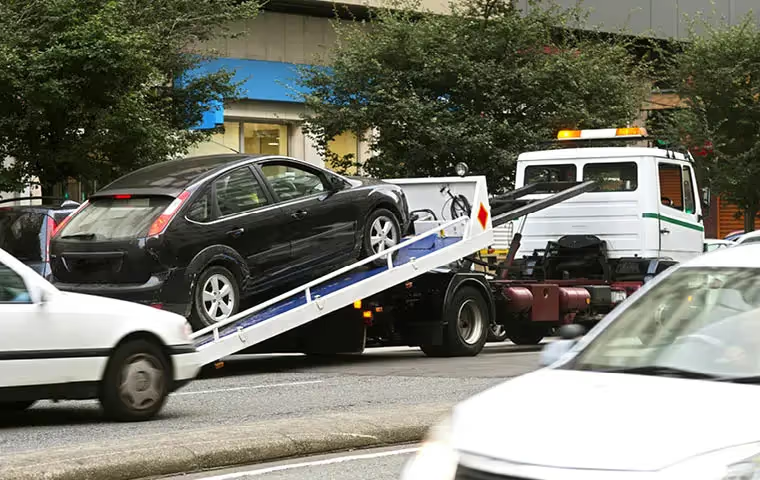
What does it take to become an award-winning fleet? Just ask Courtice Auto Wreckers. Their commitment to safety earned them a top spot in Azuga’s Safe Fleet Awards, but their story is about more than just an award. For this moving service company and leading team of auto wreckers in Courtice, success meant moving beyond guesswork. As one of the top Oshawa auto wreckers, they needed real data to have productive conversations about driver performance. This case study shows exactly how they used facts, not feelings, to improve safety and efficiency.
When you are in the Auto Moving business, monitoring trips to and from job sites as well as the hours spent on-site can make a significant impact on the efficiency of field operations. Key priorities for Courtice were maximizing fleet utilization and reducing unsafe driving, particularly in congested areas with lower posted speed limits.
For Courtice, Driver Safety has gone up, and fuel usage has improved as supported by data from Jan to Oct 2017. During this period, the number of Hard Braking events per 100 miles reduced by 57%, and Hard Acceleration events per 100 miles also reduced by 72%. This is not just reduction in risk but offers nuggets to negotiate insurance premiums down. And when drivers drive a bit safer, fuel consumption decreases. Azuga has seen 6-8% decrease in fuel when drivers change behavior on safety-related metrics.
Another area in which time saving and higher asset utilization has been achieved is in the way real-time vehicle tracking has allowed management know about vehicle locations and to provide better customer response times.
As with all of Azuga’s customers, driver safety and risk reduction are important concerns and, to curb unsafe driving effectively, Courtice uses email Alerts and trend reports. These let managers know about any instance of unsafe driving behaviors. Clearly, with both Hard Braking and Hard Acceleration events down by significant percentages, the solution has proven effective for Courtice.
Take control of your fleet and employee work hours
The ability to pinpoint the nearest available resource and assign it speedily for a customer requirement and the lowered slack time on and between sites has positively impacted productivity at Courtice.
"I can configure Azuga’s fleet tracking software exactly the way I want and get the information I need quickly and easily."
Steve Mihalic Owner, Courtice Auto Wreckers
Managing a diverse fleet in a competitive market
In the auto wrecking business, time is everything. For Courtice, operating a diverse fleet meant that efficiency was the name of the game. The challenge was to get the right vehicle to the right job site as quickly as possible, minimizing downtime and maximizing productivity. Before implementing a robust tracking system, coordinating their fleet was a constant juggle. The ability to track vehicles in real time changed how they operated, allowing them to "pinpoint the nearest available resource and assign it speedily for a customer requirement." This shift from reactive to proactive dispatching had a direct and positive impact on their daily operations and customer satisfaction.
The challenge of the Courtice and Oshawa auto wrecking industry
The auto wrecking industry in the Courtice and Oshawa area is highly competitive, and customer expectations are high. When a customer calls, they need a quick response. Any delay, or "slack time on and between sites," directly impacts the bottom line and can lead to lost business. Courtice needed a way to see their entire fleet at a glance to make smarter, faster dispatch decisions. By using route optimization and real-time tracking, they could reduce that unproductive downtime, ensuring that drivers were always on the most efficient path to their next job. This not only improved their response times but also allowed them to handle more jobs each day.
Ensuring driver accountability and safety
Beyond efficiency, Courtice Auto Wreckers knew that the safety of their drivers and the community was a top priority. Unsafe driving habits like speeding, hard braking, and rapid acceleration not only increase the risk of accidents but also lead to greater fuel consumption and vehicle wear and tear. To get a handle on this, they needed a system that could provide clear, objective data on driver behavior. By using email alerts and trend reports, managers were immediately notified of unsafe driving events. This allowed them to address issues proactively, fostering a culture of accountability and promoting safer habits across the entire fleet. It's a core part of a comprehensive fleet safety program.
Using data to uncover and address unsafe driving habits
The data spoke for itself. Courtice saw a 57% reduction in hard braking and a 72% reduction in hard acceleration events. These weren't just numbers on a report; they represented a tangible decrease in risk and a foundation for negotiating better insurance premiums. The data also helped them uncover specific issues, like identifying trucks that were missing speed limiters. This information allowed managers to have constructive conversations with drivers, not based on assumptions, but on facts. By addressing the root causes of unsafe driving and using tools like driver rewards to encourage good behavior, they built a team of more responsible, efficient drivers.
What results can you actually see?
Increased productivity—because the company optimizes trips to transfer stations, supply houses, and disposal sites.
Optimized equipment—the amount of empty-truck drivetime has considerably reduced because they are located early and re-routed to a nearby service location.
Improved safety management—achieved by communicating with drivers about unsafe driving behaviors such as hard braking and speeding to improve the fleet’s safety score.
A survey of tens of thousands of vehicles operated by Azuga’s customers shows multiple business gains besides fuel savings—reductions in unauthorized vehicle use of 12% and productivity increases of 10%.
Azuga has been an industry trendsetter with its Driver Reward Program which helps organizations incentivize performance by evaluating Driving Scores. The scores directly reflect the driver’s behavior on key parameters such as acceleration, braking, speeding, and idling, taking into account the prevailing weather.
True to its credo, “When drivers compete, everyone wins”, Azuga is advising customers on increasing driver engagement through gamification, improving productivity, and improving safety.

Improved safety and compliance
For any business with vehicles on the road, safety is non-negotiable. Courtice Auto Wreckers made significant strides in this area by focusing on driver behavior. Using data-driven insights, they saw a 57% reduction in hard braking and a 72% drop in hard acceleration events. These aren't just numbers; they represent a real decrease in on-road risk. Managers at Courtice use email alerts and trend reports to have constructive conversations with drivers about specific incidents. This proactive approach to improving driver safety not only protects the team but also helps manage insurance liabilities by demonstrating a commitment to safer operations.
Increased operational efficiency
Getting the right person to the right job quickly is the key to a productive day. For Courtice, operational efficiency improved dramatically once they could see their entire fleet in real-time. This visibility allows dispatchers to pinpoint the nearest available driver for a new customer request, cutting down on slack time between jobs. By using fleet tracking to optimize trips to transfer stations and supply houses, the company ensures every minute is spent productively. This means more jobs can be completed each day without adding more vehicles or extending work hours, directly impacting the company's bottom line and ability to serve its customers better.
Optimizing routes for towing and parts delivery
A truck driving without a load is a missed opportunity. Courtice significantly reduced its "empty-truck drivetime" by implementing smarter dispatching. Instead of having drivers return to a central hub after a job, managers can locate them on the map and immediately reroute them to a nearby service location or the next customer. This intelligent route optimization ensures that vehicles are always on the most efficient path, saving fuel and maximizing the number of service calls each truck can handle in a day.
Protecting valuable assets and equipment
Your vehicles and equipment are some of your most important business investments, and protecting them is a top priority. With better oversight, businesses can see a significant reduction in unauthorized vehicle use, as seen in a survey of Azuga customers who reported a 12% decrease. For Courtice, knowing where their trucks are at all times provides peace of mind and an extra layer of security. Effective asset management ensures that vehicles are used for their intended purpose, which prevents unnecessary wear and tear and helps maintain the value of the fleet over the long term.
Frequently Asked Questions
How did Courtice Auto Wreckers actually improve driver safety? They used data from Azuga's system to have fact-based conversations with their drivers. Instead of guessing, managers could see specific instances of unsafe driving like hard braking or rapid acceleration. This allowed them to address issues directly, provide targeted coaching, and even identify vehicle problems like missing speed limiters, leading to a safer, more accountable team.
What does it mean to reduce "empty-truck drivetime"? This refers to minimizing the time a truck is on the road without a load, which is essentially unproductive time. Courtice used real-time vehicle tracking to see where their trucks were at all times. After completing a job, a driver could be immediately rerouted to the nearest new customer or service location instead of returning to a central depot, making their operations much more efficient.
Can small changes in driving habits really make a difference? Absolutely. Courtice saw a 57% reduction in hard braking and a 72% reduction in hard acceleration. These changes don't just lower the risk of accidents; they also lead to better fuel economy and less wear and tear on the vehicles. Over time, these seemingly small adjustments add up to significant improvements in safety and operational efficiency.
How does tracking vehicles help with customer service? When a customer calls for service, a quick response is crucial, especially in a competitive industry like auto wrecking. By knowing the real-time location of every vehicle, Courtice's dispatchers can immediately identify and send the closest available truck. This reduces customer wait times and allows the company to handle more jobs throughout the day.
Besides safety, what other benefits did Courtice see from using a fleet management system? They saw a major increase in operational efficiency. By optimizing routes and reducing idle time between jobs, they were able to complete more work without adding more vehicles to their fleet. This ability to do more with their existing assets had a direct, positive impact on their productivity and overall business performance.
Key Takeaways
- Data-driven conversations improve driver safety: Using objective fleet data helps managers have constructive, fact-based conversations with drivers about their performance, leading to significant reductions in unsafe habits like hard braking and rapid acceleration.
- Real-time visibility boosts operational efficiency: Knowing the exact location of every vehicle allows for smarter dispatching, which means you can send the closest driver to a job, optimize routes, and reduce unproductive downtime between service calls.
- Proactive monitoring builds a culture of accountability: Implementing alerts and reports for unsafe driving allows you to address issues as they happen, creating a team that is more aware, responsible, and committed to safety.