The idea of a truck driving itself can feel a little unsettling. But the conversation around autonomous vehicles is quickly moving from science fiction to a practical reality for fleets. The reason is simple: safety. This technology is designed to be more reliable than a human driver, helping to prevent accidents caused by fatigue or a split-second distraction. Better fleet safety isn't just about protecting your drivers and cargo. It can also have a major impact on your bottom line, potentially leading to lower insurance premiums. Here’s how this technology makes our roads safer and what it could mean for your business.
What Are Autonomous Vehicles?
Before jumping into this discussion, we should define how autonomous vehicles work. Autonomous vehicles operate themselves, as opposed to being operated by drivers. They utilize sensors to create maps of their surroundings by visualizing obstructions in the road, nearby vehicles, lane markings, pedestrians, and traffic lights. The software can compile this information to create a path for the car by sending instructions to the actuators that control the car’s movement. These actuators control the vehicle’s acceleration, braking, and steering. The software has algorithms that help the vehicle avoid obstacles, obey traffic laws, and drive safely.
Key Terminology: Autonomous vs. Automated
You’ll often hear the words “automated” and “autonomous” used to mean the same thing, but there’s a subtle yet important difference. Think of an automated vehicle as one that follows a specific set of orders to drive itself. It’s executing tasks based on programming. The term “autonomous,” on the other hand, suggests a vehicle that can make its own choices beyond just the mechanics of driving. According to the Society of Automotive Engineers (SAE), a fully autonomous vehicle can operate without any human intervention by perceiving its environment and making independent decisions. While the industry often prefers the term automated to describe current technology, a truly autonomous car is the end goal—a vehicle that thinks for itself.
Autonomous vs. Connected Vehicles
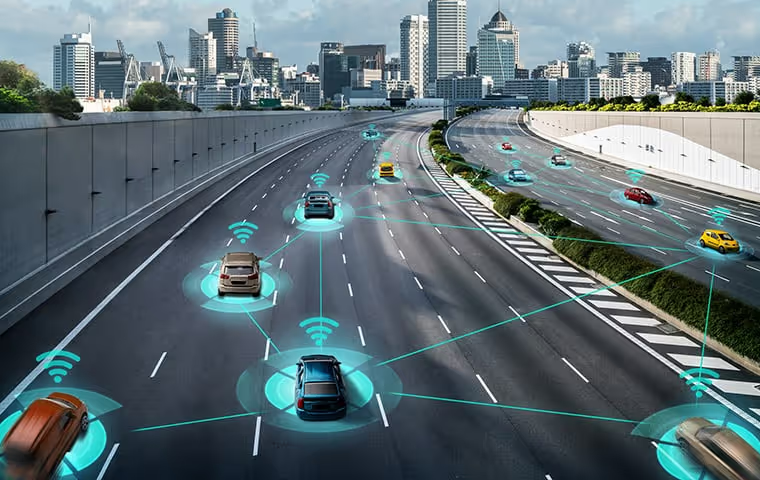
It’s also helpful to understand the distinction between autonomous and connected vehicles. An autonomous vehicle (AV) relies on its own internal technology—like sensors, cameras, and powerful computers—to see and react to the road around it. It’s a self-contained system. A connected vehicle (CV), however, uses technology to communicate with other vehicles, smart traffic signals, and other infrastructure. This constant stream of information helps the vehicle understand what’s happening beyond its immediate line of sight, like a traffic jam around the corner. A vehicle can be one without being the other, but the most powerful systems combine both, creating a vehicle that not only sees its environment but also gets real-time updates from the world around it.
How Autonomous Is an Autonomous Vehicle?
There are five levels of automation in autonomous vehicles.
Level 0: The human driver has complete control. This is not an autonomous vehicle.
Level 1: There is some level of driver assistance, such as adaptive cruise control or lane centering. This is not an autonomous vehicle.
Level 2: This level is called partial automation. The driver must keep their hands on the wheel, but the car includes both adaptive cruise control and lane centering. This is not an autonomous vehicle.
Level 3: The driver can take their hands off the wheel and perform other actions, but the vehicle can instruct the driver to intervene. This is an autonomous vehicle.
Level 4: The driver does not need to intervene if the car is in a specific area. This is an autonomous vehicle.
Level 5: The driver does not ever need to intervene. This is an autonomous vehicle.
The Levels of Automation
It's helpful to think of vehicle automation as a spectrum rather than a simple on/off switch. The Society of Automotive Engineers (SAE) defines these capabilities across six distinct levels, from Level 0 where the driver does everything, to the ultimate goal of Level 5, where the vehicle handles all driving tasks under all conditions. While many modern vehicles include features from Levels 1 and 2, like adaptive cruise control, the jump to higher levels of automation involves significant technological leaps. Understanding these distinctions is key to seeing where the industry is today and the challenges that remain before we see truly driverless vehicles on our roads.
Why No Fully Autonomous Cars Exist Yet
Despite the rapid progress we've seen, you can't go out and buy a fully autonomous, Level 5 vehicle today. The reason is that reaching this final stage of automation is incredibly complex. A Level 5 vehicle must be able to operate itself in every single situation a human driver might face, without any possibility of human intervention. This requires software and mapping systems far more advanced than what's currently available, capable of handling everything from sudden downpours and poorly marked roads to unpredictable human behavior on the streets.
One of the biggest hurdles is perception and response. While today's systems are good, they still struggle to consistently and accurately identify every object in their path—especially vulnerable road users like pedestrians and cyclists—and react appropriately in every scenario. Think about the split-second, intuition-based decisions human drivers make in chaotic city traffic. Replicating that level of judgment is a massive challenge. Before these vehicles can be widely and safely deployed, they need to prove they can handle the near-infinite number of unexpected events that happen on the road every day, which requires countless hours of testing and refinement.
How Autonomous Vehicle Technology Works
So, how does a vehicle drive itself without a human behind the wheel? It’s not magic—it’s a sophisticated partnership between advanced hardware and intelligent software. Think of it as a three-step process: sense, think, and act. The vehicle uses a suite of high-tech sensors to “sense” its surroundings, creating a detailed, 360-degree map in real time. Then, its powerful onboard computer “thinks,” processing all that data to predict what other objects will do and to plan a safe path forward. Finally, the system “acts” by sending precise instructions to the vehicle’s steering, acceleration, and braking systems. This continuous loop allows the vehicle to react to changing road conditions faster and more reliably than a human ever could.
This technology is built on a foundation of sensors, complex algorithms, and machine learning systems. Essentially, the vehicle is constantly learning and adapting. It identifies everything from lane markings and traffic signs to other cars and pedestrians, creating a comprehensive picture of the world around it. This level of awareness is key to improving fleet safety and operational efficiency, which is why so many fleet managers are paying close attention. The goal isn't just to replace the driver but to create a system that is safer, more reliable, and more predictable in its performance on the road.
Core Components: LiDAR, Radar, and Cameras
Autonomous vehicles rely on a team of sensors working together to see the world. The three main players are LiDAR, radar, and cameras. LiDAR (Light Detection and Ranging) acts like the vehicle's navigator, using laser pulses to create a precise 3D map of its surroundings and measure distances with incredible accuracy. Radar uses radio waves to detect other vehicles and objects, and it’s especially good at judging their speed, even in rain or fog. Finally, high-resolution cameras serve as the vehicle’s eyes, identifying traffic lights, reading road signs, and spotting pedestrians. Much like an AI dashcam uses video to analyze the road, these cameras provide critical visual context for the vehicle’s computer.
Types of Autonomous Vehicles
When we hear "autonomous vehicle," most of us picture a self-driving car. But the technology is being adapted for a much wider range of vehicles, especially in the commercial world. Any vehicle can become autonomous if its core driving functions are automated. This includes everything from massive freight trucks and city buses to smaller shuttles and even sidewalk delivery robots. For businesses that rely on a diverse fleet, this means automation isn't a one-size-fits-all solution. Instead, it’s a flexible technology that can be applied to the specific vehicles that power your operations, whether you’re in logistics, public transit, or last-mile delivery.
Beyond Cars: Trucks, Shuttles, and Delivery Robots
The real-world applications of autonomous technology go far beyond personal cars. In the trucking industry, autonomous systems are being developed to handle long, monotonous highway stretches, allowing human drivers to take over for the more complex final miles of the journey. This could improve efficiency and reduce driver fatigue. In cities, small autonomous shuttles could help connect people to public transportation hubs, making transit more accessible for everyone. And for local commerce, small delivery robots are already being tested to carry everything from groceries to packages directly to customers' doors, streamlining the logistics of the last mile.
How Autonomous Vehicles Improve Fleet Safety
A Sober, Focused Driver, 24/7
When alcohol- or drug-impaired drivers get behind the wheel of a vehicle, it often has catastrophic results. The CDC found that 28% of all traffic-related deaths in the United States are caused by alcohol-related crashes. This is a staggering amount. If impaired drivers get behind the wheel of an autonomous vehicle, they are not in control, making it far less likely that they will cause an accident. Fortunately, this can reduce accidents significantly and save many lives. Insurers are aware of this and will very likely offer decreased insurance premiums due to this fact.
A Driver That Always Follows the Rules
Of course, there are so many rules of the road to follow. There are the basics, but there are street signs and special cases to consider as well, and any person may get confused or forget on a bad day or if they’re distracted. Autonomous cars do not fall prone to these errors. They can sense all street signs and are programmed to know all of the rules of the road, so they don’t ever run the risk of breaking them. Obeying traffic laws doesn’t only prevent you from getting pulled over, but it can keep you safe as well.
Minimizing Costly Human Mistakes
Autonomous vehicles are very likely to outperform human drivers in terms of safety. This is because they are not prone to human error. The Department of Transportation (DOT) and the National Highway Traffic Safety Administration (NHTSA) found that 94% of accidents in the United States are caused by human error. This means that taking human error out of the equation could eliminate a massive number of accidents that occur on our roads every day.
Challenges and Drawbacks of Autonomous Vehicles
While the promise of a fully autonomous fleet is exciting, the road to get there is filled with some significant bumps. The technology is still evolving, and it’s important for fleet managers to have a realistic view of the hurdles that remain. From technical glitches to public perception, these challenges highlight why a human driver, supported by smart technology, is still the most reliable asset on the road today. Understanding these limitations helps set practical expectations for how and when autonomous vehicles will become a mainstream part of commercial operations.
Safety Limitations and Technical Hurdles
The biggest challenge for autonomous vehicles is developing software that can safely handle the endless variety of real-world driving scenarios. While a human driver can use intuition to navigate a confusing construction zone or react to an unusual obstacle, an AV relies entirely on its programming and sensor data. According to experts, a major hurdle is creating advanced software and maps that can handle all the different driving conditions humans experience, like bad weather, poor roads, and unexpected events. This gap between predictable programming and unpredictable reality is where many of the current safety concerns lie.
Performance in Poor Weather and Complex Environments
An autonomous vehicle’s sensors—like cameras, LiDAR, and radar—are its eyes on the road. But just like human eyes, their performance can be seriously hampered by bad weather. Heavy rain, snow, or fog can obscure sensor views, making it difficult for the vehicle to accurately perceive its surroundings. Similarly, complex urban environments with dense traffic, unpredictable pedestrians, and unclear lane markings present a massive data-processing challenge. As one research center notes, AVs need to process a lot of information, and this changes with weather, light, speed, and how busy the road is. Until the technology can prove its reliability in all conditions, widespread adoption remains a distant goal.
Social Challenges and Public Trust
Technology can be perfect, but if people don’t trust it, it won’t succeed. Autonomous vehicles face a significant uphill battle when it comes to public perception. High-profile accidents involving self-driving features have created skepticism and fear among the general public and professional drivers alike. In fact, public trust is quite low; a 2022 survey found that only about 27% of people worldwide would feel safe in a self-driving car. For fleet-based businesses, this isn't just a public relations issue—it affects driver morale, recruitment, and how customers view the safety of your operations.
The Problem of Technological Bias
An often-overlooked issue is the potential for bias to be programmed into autonomous systems. The artificial intelligence that powers these vehicles learns from vast datasets, and if that data isn't diverse and inclusive, the system's performance can be flawed. For example, a 2019 study revealed that some self-driving systems were 5% less effective at recognizing people with darker skin tones. This kind of technological bias poses serious ethical and safety risks. Ensuring that AVs can operate fairly and safely for everyone, regardless of their appearance or location, is a critical challenge that developers must address before these vehicles can be deployed responsibly on public roads.
The Current Market and Industry Landscape
The race to develop autonomous vehicles is a marathon, not a sprint, with a handful of major tech and auto companies leading the pack. Each company is taking a slightly different path, with some focusing on consumer cars and others targeting commercial applications like robotaxis and delivery services. This varied approach shows that there isn't one clear road to an autonomous future. For fleet managers, watching these developments is key to understanding which technologies might eventually integrate into their operations and what the timeline for that might look like.
Leading Companies and Their Strategies
Several key players are shaping the autonomous vehicle industry. Waymo (owned by Google's parent company, Alphabet) is a frontrunner, with a strategy centered on robotaxis that operate without human drivers in select cities. Meanwhile, companies like Tesla are pursuing a different route, focusing on advanced driver-assistance systems (ADAS) in their consumer vehicles. Other automotive giants and tech startups are also investing heavily, each carving out a niche, whether it's in long-haul trucking, last-mile delivery, or urban mobility. These different strategies are creating a complex and competitive market.
The Rise of Fleet-Based Ownership Models
Before autonomous vehicles become common in personal driveways, they will likely appear in commercial fleets. It’s widely believed that AVs will first be owned and run by companies as fleets, similar to today's ride-sharing or delivery services. This model makes sense for several reasons: fleets can manage the high initial investment, handle specialized maintenance, and deploy vehicles in controlled environments where the technology works best. For businesses in logistics, transportation, and field services, this trend could open up new operational models and efficiencies, making it a critical area to watch.
Recent Industry Setbacks and Scaled-Back Plans
Despite the initial hype, the path to full autonomy has been tougher than many expected. The immense technical and regulatory challenges have led some major players to pump the brakes on their ambitious timelines. Companies like Cruise (a subsidiary of GM), Ford, and Volkswagen have all publicly scaled back their self-driving plans in recent years. These setbacks are a dose of reality, showing that creating safe and reliable autonomous systems is incredibly complex. This shift suggests the industry is moving toward a more incremental approach, focusing on perfecting driver-assistance features before making the leap to full automation.
Regulations and Legal Issues
Beyond the technology itself, a maze of legal and regulatory questions stands in the way of widespread autonomous vehicle adoption. For fleet operators who live and breathe compliance, this uncertainty is a major concern. Issues around liability, state-versus-federal laws, and data privacy are still largely unresolved. Before any company can confidently add AVs to its fleet, these critical questions need clear answers. The legal framework must catch up to the technology to create a safe and predictable environment for everyone on the road.
The Patchwork of US Regulations
In the United States, there is no single, clear national law governing self-driving cars. Instead, what exists is a confusing mix of federal guidelines and state-specific rules. This regulatory patchwork creates a complicated operating environment, especially for commercial fleets that cross state lines. A vehicle that is legally permitted to operate in one state may face different restrictions or be prohibited in another. This lack of a unified legal framework is a significant barrier to deploying autonomous vehicles on a national scale and makes long-term planning difficult for businesses.
The Unanswered Question of Liability
Perhaps the most pressing legal question is: who is at fault when an autonomous vehicle crashes? As one industry analysis puts it, "If an autonomous car crashes, who is at fault? The carmaker or the passenger?" This question is far from settled. Is it the owner of the vehicle, the manufacturer of the hardware, the developer of the software, or the fleet operator who deployed it? Without clear laws defining liability, the financial and legal risks for businesses are enormous. This uncertainty is a major reason why solutions that assist human drivers, like AI dashcams that provide clear video evidence, remain a cornerstone of modern fleet safety programs.
Societal and Economic Impact
The transition to autonomous vehicles won't just change how we get from point A to point B; it has the potential to reshape our economy and society in profound ways. From the job market to urban design, the ripple effects will be felt across numerous sectors. While some of these changes promise greater accessibility and efficiency, others raise serious concerns about job displacement and data privacy. Understanding this broader impact is essential for planning a future where this technology serves businesses and communities effectively and ethically.
Potential for Job Displacement
One of the most significant societal concerns surrounding autonomous vehicles is the potential for job displacement. Millions of Americans earn their living as professional drivers. It's estimated that self-driving technology could eventually replace nearly 2.9 million jobs in the US, including truck, taxi, delivery, and bus drivers. For the industries that Azuga serves, where skilled drivers are the backbone of operations, this is a sensitive and complex issue. The transition will require careful planning, retraining programs, and a focus on how technology can augment, rather than simply replace, human workers.
New Opportunities for Mobility and Urban Planning
On the positive side, autonomous vehicles could revolutionize personal mobility and urban living. AVs could help people who are unable to drive—due to age, disability, or not having a license—gain newfound independence and access to transportation. This could dramatically improve quality of life for millions. Furthermore, widespread AV adoption could change how cities are designed. With less need for parking lots and wider roads, urban planners could reclaim space for parks, housing, and pedestrian-friendly areas, creating more livable and sustainable communities.
Ethical and Privacy Concerns
Autonomous vehicles are essentially data-gathering machines on wheels. They are equipped with sensors and cameras that constantly collect information about their surroundings, and their internet connectivity makes them part of a larger network. This constant data collection raises significant privacy concerns. As one report notes, internet-connected self-driving cars collect a lot of personal data, creating worries about hacking and how that information is used, stored, and protected. Establishing strong data privacy standards and cybersecurity measures will be crucial to building and maintaining public trust in this technology.
Preparing Your Fleet for an Autonomous Future
Azuga is at the forefront of fleet technology. Our fleet solutions are always one step ahead of the latest technological advancements. Furthermore, we keep you up to date on the latest industry news with our blog. Stay up to date on everything Azuga has to offer on our website and check out our technology to keep your fleet ahead of the game.
Frequently Asked Questions
My new trucks have features like adaptive cruise control. Does that make them autonomous? Not quite. While features like adaptive cruise control and lane centering are steps toward automation, they are considered driver-assistance technologies. They fall into the lower levels of automation (Levels 1 and 2) where the driver must remain fully engaged and ready to take control at any moment. A truly autonomous vehicle (Level 3 and above) is designed to handle all driving tasks on its own within specific conditions, allowing the driver to safely turn their attention elsewhere.
What is the main safety advantage of autonomous vehicles for a commercial fleet? The biggest safety advantage is the potential to virtually eliminate human error. The vast majority of accidents are caused by mistakes like distraction, fatigue, or impairment. An autonomous system is designed to be a driver that is always sober, focused, and programmed to follow every traffic law perfectly. This consistency can dramatically reduce the risk of accidents, protecting your drivers, your vehicles, and your cargo.
Realistically, how soon could I add fully driverless trucks to my fleet? While the technology is advancing quickly, truly driverless vehicles that can operate anywhere, in any condition (Level 5), are still many years away. The industry is facing significant technical and regulatory hurdles. It's more likely that we will first see vehicles with high levels of automation (Level 4) that can operate without a driver, but only in specific, controlled environments like designated highway corridors or logistics hubs.
What's the single biggest hurdle preventing the widespread use of this technology? The greatest challenge is proving that these systems can safely and reliably handle the endless unpredictability of the real world. A human driver can use intuition to react to a sudden detour, a pedestrian stepping into the road, or a severe weather event. Programming a vehicle to consistently make the right decision in every possible scenario is incredibly complex. Until the technology can prove its performance in all conditions, major concerns about safety, liability, and public trust will remain.
How does this technology relate to the AI dashcams my fleet uses now? They are built on similar foundations. Both autonomous vehicles and AI dashcams use advanced cameras and sensors to see and interpret the road. The key difference is their purpose. An AI dashcam works as a co-pilot for your human driver, identifying risks and providing video evidence to improve safety and resolve liability questions. An autonomous system, on the other hand, uses that same sensory information to take over the act of driving itself. Think of today's dashcams as a key technology that helps pave the way for a more automated future.
Key Takeaways
- Safety is the core benefit: The main goal of autonomous vehicle technology is to make roads safer by removing the potential for human error, such as distracted or impaired driving, which is a leading cause of accidents.
- Automation is a spectrum, not a switch: True, fully driverless vehicles are still a future goal. Understanding the different levels of automation helps clarify what current technology can do and sets realistic expectations for how it might be integrated into fleets over time.
- Major hurdles still exist: Before autonomous vehicles are widely adopted, the industry must overcome significant challenges. These include perfecting the technology to handle poor weather, establishing clear laws about liability, and earning public trust.