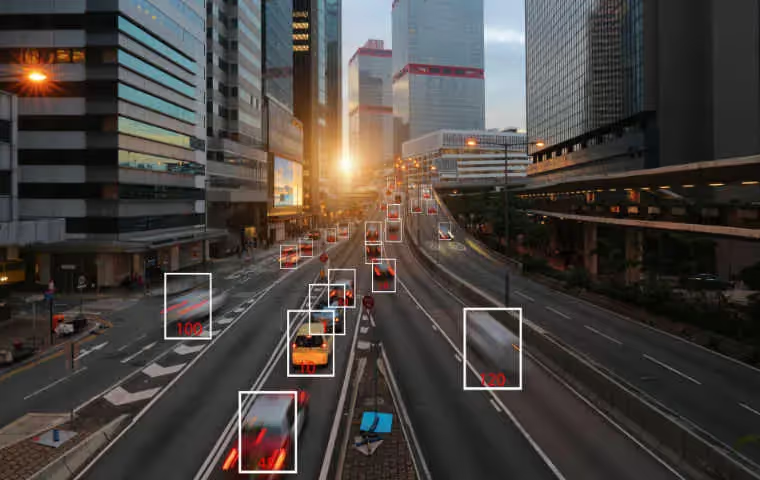
You’ve probably heard the term Artificial Intelligence (AI), but you might not realize you use it every day. When your GPS finds the fastest route or your social media feed shows you a new post, that’s AI at work. Now, this same smart technology is changing how fleets operate. It’s the core of modern fleet management intelligence. By using AI fleet telematics, you can turn endless vehicle data into simple, clear answers. This helps you make smarter decisions to improve safety and efficiency across all your operations.
It wasn’t that long ago that AI seemed like science fiction or some far-flung future tech. But with today’s machine learning technologies we encounter it just about every day. AI is being used to improve a vast array of industries, making businesses more efficient, safer, and more cost effective. And fleet managers are glad to report several useful applications for fleets large and small. Here’s how.

How to spot risky driving behavior in your fleet
With machine learning capabilities, we’ve now learned which behaviors are most likely to lead to accidents on the road. And in-cab technology allows us to track these behaviors and remind drivers to make real-time corrections, making our roadways a safer place. But how did this come about?
It starts with data. GPS tracking technologies like Azuga’s fleet telematics suite provide a wealth of data on driver behavior including diagnostics, speeding, calls made or received, idling, braking, and so much more. Our telematics system also monitors diagnostics like low battery, check engine light, low fuel, and temperature sensor readings.
The AI then takes in all of this data and computes which behaviors are most likely to lead to accidents. With more data fed into the system, the AI can more precisely predict outcomes and accidents. Things like speeding, hard braking, and cell phone distractions all jump out as risky behaviors.
Improve fleet safety with AI telematics
Of course, all of this wonderful data is of no use until it actually changes the way our drivers drive. We’ve created several ways to motivate drivers and improve overall fleet performance.

The first step is coaching. Your drivers may not even realize how often they’re performing risky behaviors. Our state-of-the-art telematics solution allows you to fix this. Rather than showing drivers reports hours, days, or even weeks after incidents occur, we can point out unwanted behavior in real time, allowing for immediate correction. Options like in-cab buzzers or phone coaching from connected fleet managers can make all the difference.
Next, our driver safety scores take risky behaviors into consideration. Fleet managers can monitor the performance of their drivers with a simple and easily tracked score. Drivers can also see their own safety score, so they’ll know how they’re doing and where they need improvement. It’s only natural for some healthy competition to arise. And when drivers compete to be the safest on the road, everyone wins.
Finally, our fleet program even gives you ways to reward drivers who excel at safe driving. Our driver safety rewards allow you to recognize those drivers who take safety seriously. We offer a platform to allow you to give small but frequent incentives to your best drivers. This helps you keep safe drivers happy and motivated to perform well, and spur drivers whose safety scores are less than favorable to make real, lasting changes.
So at the end of the day, our roads are safer, your drivers are happier, and your company’s reputation for safety will soar. And it’s all thanks to AI.
Use AI dash cams for real-time alerts
AI-powered dash cams act as a second set of eyes on the road, providing a level of oversight that goes far beyond simple recording. These intelligent cameras analyze both driver behavior and external road conditions in real time. When the AI detects a risky event, such as tailgating, distracted driving, or a potential forward collision, it can trigger an immediate in-cab audio alert for the driver. Simultaneously, it sends a notification with a video clip to the fleet manager. This allows you to quickly review critical events without sifting through hours of footage, giving you a clear and immediate understanding of what’s happening in your vehicles.
Predict and prevent incidents with proactive coaching
While real-time alerts are crucial for immediate correction, the true power of AI lies in its ability to predict and prevent incidents before they happen. By analyzing telematics and dash cam data over time, the system identifies patterns and trends in driver behavior. It can pinpoint which drivers consistently exhibit risky habits and may benefit from additional training. This data-driven approach allows you to coach your team proactively, addressing potential issues before they escalate into accidents. It transforms your safety program from a reactive process to a preventative one, fostering a stronger, more resilient safety culture across your entire fleet.
Go beyond safety with comprehensive fleet intelligence
Improving driver safety is a cornerstone of any successful fleet, but the benefits of AI extend into every corner of your operation. An integrated AI-powered system provides a complete, 360-degree view of your fleet, turning raw data points into actionable business intelligence. This capability moves far beyond basic GPS tracking, offering deep insights that empower you to make smarter, more informed decisions about everything from asset utilization and fuel consumption to maintenance schedules and route planning. A comprehensive platform unifies your vehicles, assets, and data, creating a single source of truth to manage your operations with greater precision and efficiency.
Streamline operations for greater efficiency
In fleet management, efficiency is everything. AI helps you streamline your daily workflows by automating time-consuming tasks and delivering the insights needed to optimize performance across the board. By connecting your vehicles and analyzing their activity, AI can identify operational bottlenecks, highlight opportunities to reduce idle time, and ensure your team is working as productively as possible. This translates into getting more accomplished each day, all while keeping your drivers, vehicles, and schedules perfectly aligned for maximum output.
Plan the most effective routes
Manually planning routes is not only tedious but also often fails to account for the dynamic nature of the road. AI-powered route optimization removes the guesswork by analyzing real-time traffic, weather conditions, service windows, and historical data to automatically calculate the most efficient path for every job. This ensures your drivers arrive on time, improving customer satisfaction while significantly reducing fuel consumption, mileage, and vehicle wear and tear. It’s a smarter way to plan that directly impacts your bottom line.
Track asset and equipment utilization
Your fleet consists of more than just vehicles. High-value equipment and assets, from trailers and containers to generators and tools, are vital to your operations. AI-powered asset tracking provides complete visibility into the location and status of this critical equipment. This helps prevent theft, loss, and unauthorized use. By monitoring utilization data, you can also ensure your assets are deployed effectively, avoiding unnecessary rentals and maximizing the return on every piece of equipment you own.
Manage the entire vehicle lifecycle
Every vehicle in your fleet is a significant investment, and managing its entire lifecycle is key to maximizing its value. AI gives you the tools to oversee every aspect of a vehicle's health and performance, from the day it joins your fleet to the day it's retired. By continuously monitoring engine diagnostics, tracking fuel efficiency, and analyzing the impact of driver behavior, you get a complete and detailed profile for every vehicle. This data-driven approach helps you make strategic decisions about maintenance, repairs, and eventual replacement, ensuring you get the most out of each asset.
Automate scheduled maintenance
Unexpected vehicle downtime can bring your operations to a grinding halt. AI helps you move away from reactive repairs and toward a proactive, scheduled maintenance strategy. The system tracks vehicle diagnostics, mileage, and engine hours to accurately predict when service is needed. It can automatically generate work orders and send timely reminders to managers and drivers, ensuring that crucial maintenance tasks are never overlooked. This preventative approach keeps your vehicles in peak condition, extends their operational lifespan, and drastically reduces the risk of expensive roadside breakdowns.
Simplify vehicle inspections with digital tools
Daily vehicle inspections are a fundamental part of maintaining a safe and compliant fleet, but traditional paper-based methods are often slow and prone to error. Digital inspection tools streamline this entire process, enabling drivers to complete and submit detailed reports directly from a mobile device. AI can then analyze the submitted data, automatically flagging recurring defects or critical issues that require immediate attention. This not only simplifies the inspection process but also creates a clear, accessible digital record for compliance and ensures your vehicles are always safe and road-ready.
Stay on top of compliance and regulations
Navigating the complex web of industry regulations can be a significant challenge for any fleet manager. AI-powered fleet management systems help you maintain compliance with automated tools and simplified reporting. Whether you need to track Hours of Service (HOS), maintain vehicle inspection records, or manage fuel tax reporting, the platform automates many of these processes and reduces the likelihood of human error. This provides you with the confidence and peace of mind that comes from knowing your fleet is consistently operating within legal requirements.
Manage electronic logging devices (ELD)
For commercial fleets, ELD compliance is a critical, non-negotiable requirement. AI-driven systems ensure that your electronic logs are always accurate, reliable, and up-to-date. The platform automatically records driving time, monitors driver duty status, and provides clear, proactive alerts for any potential HOS violations before they occur. This simplifies record-keeping for both your drivers and your administrative team, making audits less stressful and helping you avoid the risk of costly fines associated with non-compliance.
Work toward your sustainability goals
As businesses increasingly focus on environmental responsibility, your fleet can play a pivotal role in achieving sustainability goals. AI directly contributes to your green initiatives by helping to reduce your fleet's carbon footprint. Through advanced route optimization, idle time reduction, and the monitoring of inefficient driving behaviors like harsh acceleration and speeding, the system enables you to significantly cut down on fuel consumption. This not only lowers your operational expenditures but also demonstrates a tangible commitment to building a more sustainable and environmentally friendly business.
Leverage advanced platform features
The most effective fleet management solutions are built on powerful and adaptable platforms designed to evolve with your business. Advanced features driven by AI are crafted to make your job easier, not more complex. From intuitive dashboards that visualize key performance indicators at a glance to AI-powered assistants that provide instant answers to your questions, the technology is designed to work for you. This allows you to spend less time searching for data and more time making the strategic decisions that will propel your business forward.
Get answers fast with AI-powered assistants
Imagine having the ability to get detailed information about your fleet simply by asking a question in plain language. That is the reality with AI-powered assistants. Instead of navigating menus and building complex reports, you can ask direct questions like, "Which of my vehicles are due for an oil change this month?" or "Show me the safety score trends for the entire fleet over the last quarter." The AI assistant interprets your request and delivers the answer in seconds, providing you with immediate access to the critical insights you need to manage your fleet effectively.
Integrate with your existing tools
Your fleet management system should not operate in isolation. A truly advanced platform is designed with flexibility in mind, allowing you to integrate it seamlessly with the other essential business tools you use every day. Whether you need to connect to your accounting software, fuel card providers, or internal maintenance systems, these integrations create a unified and efficient workflow. This ensures that data flows smoothly across your business ecosystem, eliminating redundant manual entry and providing a more complete, holistic view of your entire operation.
Find solutions tailored to your industry
Every industry presents its own unique set of operational challenges, from construction and logistics to pest control and utilities. A robust AI fleet management solution is not a one-size-fits-all product; it is a flexible platform that can be tailored to meet the specific demands of your business. Whether your priority is tracking heavy equipment on a remote job site, optimizing multi-stop delivery routes, or ensuring regulatory compliance for long-haul trucking, the system can be configured to address your most important goals. This industry-specific approach ensures you are equipped with the most relevant tools and insights for your unique operation.
The evolving role of the modern fleet manager
With the rise of this powerful technology, it’s natural to consider what it means for the role of the fleet manager. AI doesn’t replace the need for experienced managers; it empowers them to be more effective than ever before. By automating routine administrative tasks and providing deep, predictive insights, AI frees you from the constant cycle of reactive problem-solving. Your role can evolve from putting out daily fires to focusing on proactive, strategic initiatives. You can dedicate more time to long-term planning, driver development, and discovering new opportunities for innovation, truly guiding the future success of your fleet.
Frequently Asked Questions
How does the AI know which driving behaviors are risky? The system learns by analyzing data from thousands of vehicles over millions of miles. It identifies patterns in speed, acceleration, braking, and cornering that frequently lead to accidents. So, it’s not just flagging a single hard brake; it’s recognizing consistent habits that indicate a higher risk, allowing you to coach drivers on specific areas for improvement.
Will my drivers feel like they're being spied on? That's a common and valid concern. The most successful fleets introduce this technology as a tool for support and recognition, not punishment. By focusing on features like driver safety scores and rewards for safe driving, you can create a positive culture. It becomes less about monitoring and more about providing drivers with the feedback they need to be safer and recognizing them for their professionalism.
Is this technology just for improving driver safety? While safety is a huge benefit, the intelligence extends to your entire operation. The same data helps you find the most efficient routes, which saves fuel and reduces vehicle wear. It can also track your valuable assets and equipment to prevent loss and automate your maintenance schedules to keep vehicles on the road and out of the shop.
Is an AI-powered system complicated for my team to use? Not at all. Modern platforms are designed to be straightforward and intuitive. The goal is to give you clear, simple answers without making you dig through spreadsheets. Features like AI assistants let you ask plain-language questions and get immediate results, so you spend less time managing software and more time managing your fleet.
Does AI make the fleet manager's job less important? Quite the opposite. AI automates the time-consuming, repetitive tasks, like sifting through data and generating reports. This frees you up to focus on what really matters: strategic planning, coaching your team, and making high-level decisions. It acts as your most effective assistant, allowing you to evolve from a daily problem-solver to a forward-thinking leader.
Key Takeaways
- Shift your safety program from reactive to proactive: AI analyzes driving habits to identify risks, allowing you to coach drivers with specific, data-backed insights and prevent incidents before they occur.
- Increase operational efficiency with intelligent automation: AI optimizes routes using real-time conditions, tracks valuable assets to prevent loss, and reduces fuel waste from idling, helping your team accomplish more.
- Simplify vehicle management and compliance: Use AI to automate maintenance schedules based on vehicle health, digitize daily inspections for faster reporting, and maintain accurate electronic logs to meet regulations effortlessly.