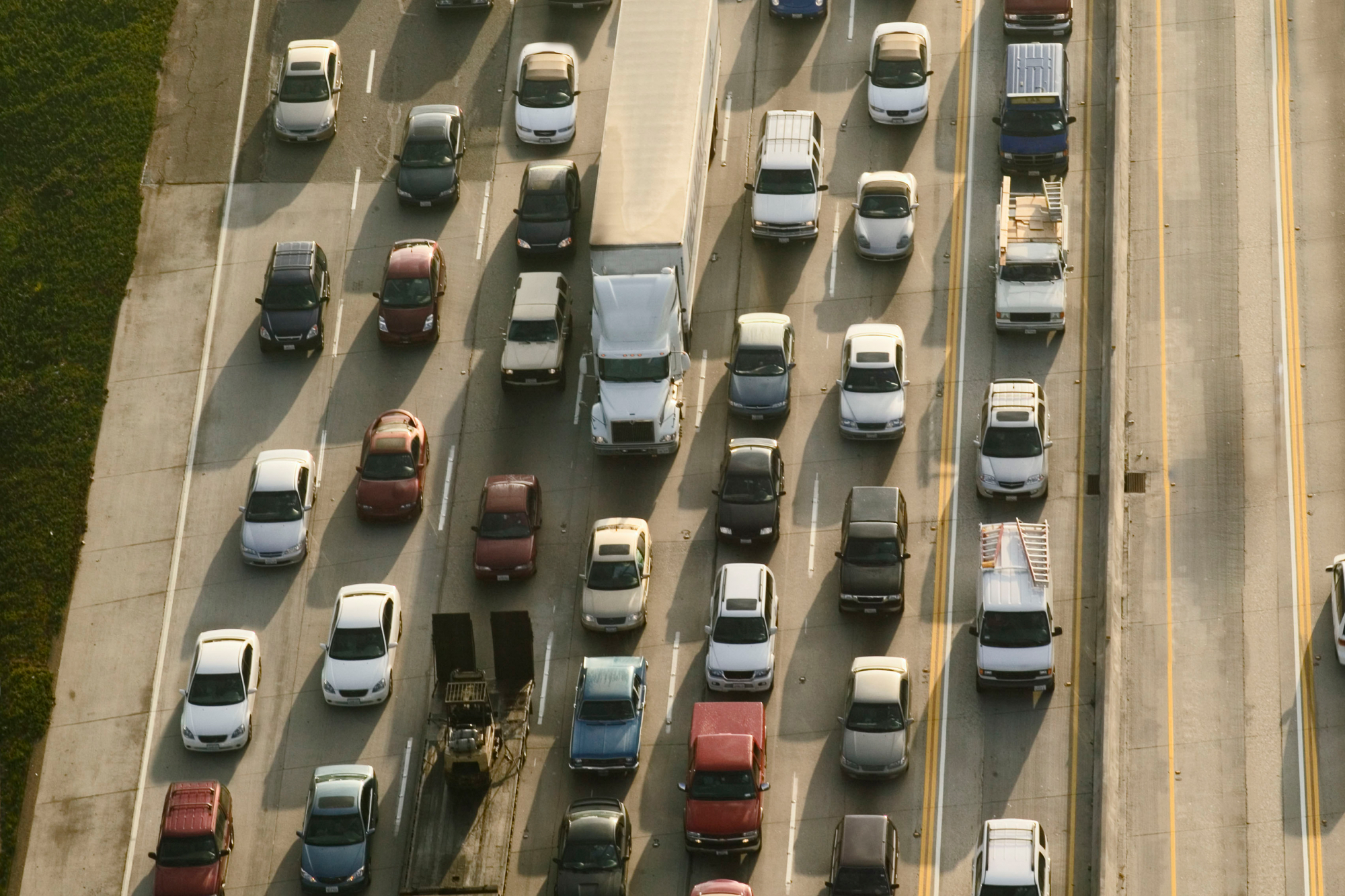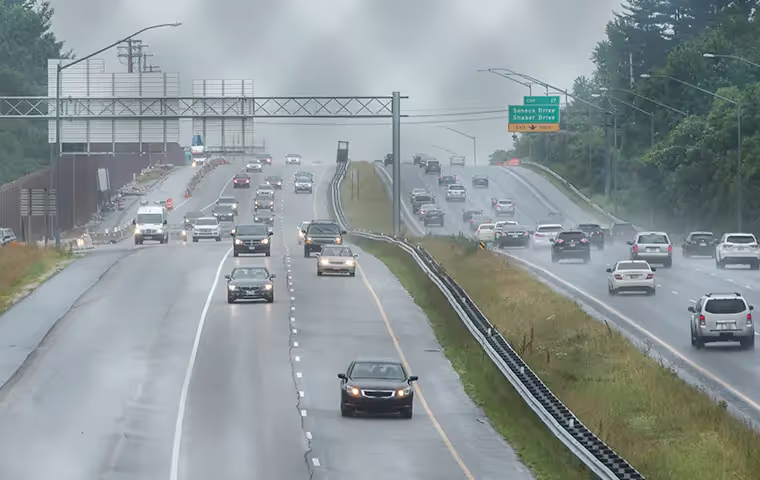
Recent NHTSA findings suggest a surprising trend: highway fatalities may be on the decline. We covered this in our article, "The NHTSA Reports that Highway Fatalities May Be Going Down." While this is positive news, it doesn't fully answer the question many fleet managers ask. Are highways dangerous simply because the stakes are higher? This leads to a critical debate: are highways more dangerous than local roads, even if accidents are less frequent? Understanding the difference between high-speed and low-speed risk is key.
This statistical drop is excellent news! However, the consensus is that roads are getting more dangerous. With the pandemic potentially causing an outlier in the data, could this be true? Let’s explore why this idea is prevalent in the U.S.
The highway safety paradox: fewer crashes, higher severity
It might sound counterintuitive, but highways are generally safer than local roads when it comes to the number of accidents. The design of highways eliminates many of the common hazards you find on city streets. However, this statistical safety comes with a serious catch. While you’re less likely to be in a crash on the highway, any accident that does occur is far more likely to be severe or fatal. This is what’s known as the highway safety paradox.
The core reasons for this paradox are speed and design. The very features that reduce the frequency of collisions—long, straight stretches of road with few interruptions—also allow for much higher speeds. When something goes wrong at 65 miles per hour, the consequences are exponentially more dangerous than a fender bender in a parking lot. Understanding this trade-off is key for any fleet manager focused on keeping their drivers safe, as the risks change dramatically depending on the type of road your team is on.
Why highways have fewer accidents
Highways are engineered environments designed for one primary purpose: moving a large volume of vehicles efficiently and safely over long distances. This focus on streamlined movement means that many of the variables that cause accidents on local roads are simply not present. The entire system is built to minimize conflict points and keep traffic flowing smoothly. This controlled environment is the main reason we see fewer total crashes on interstates and freeways compared to the chaotic nature of surface streets.
Uniform traffic flow
One of the biggest safety advantages of a highway is the consistent flow of traffic. For the most part, vehicles are traveling in the same direction at similar speeds. There are no intersections with cross-traffic, no driveways to pull out of, and no pedestrians to watch for. This uniformity reduces the number of sudden stops and unexpected events, creating a more predictable driving environment where the risk of a collision is significantly lower.
Fewer intersections and hazards
Intersections are a major hotspot for accidents. In fact, over half of all crashes that result in injury or death happen where roads cross. Highways are designed specifically to avoid these conflict zones. By using on-ramps, off-ramps, and overpasses, highways eliminate the need for vehicles to cross paths directly. This design philosophy drastically cuts down on the potential for T-bone collisions and other dangerous intersection-related incidents that are common on city streets.
Safer design features
Beyond the lack of intersections, highways incorporate numerous design features aimed at preventing accidents. They have fewer points of entry and exit, which means fewer chances for collisions compared to local roads with countless side streets and businesses. Features like wide shoulders provide a safe space for disabled vehicles, median barriers prevent head-on collisions, and clear, consistent signage helps drivers anticipate road conditions well in advance. These elements work together to create a more forgiving and controlled driving space.
Why highway accidents are more severe
While the design of highways prevents many minor accidents, it also creates the conditions for more catastrophic ones. The primary culprit is speed. The same open roads that allow for smooth travel also enable vehicles to reach speeds where the laws of physics become unforgiving. When an incident occurs on a highway, the immense energy involved often leads to devastating outcomes that are far less common in the lower-speed environments of local roads.
The impact of high speeds
The relationship between speed and crash severity is not linear; it's exponential. As speed increases, so does the kinetic energy of a vehicle. In a collision, this energy is released in a fraction of a second, resulting in massive force. As one source notes, "When crashes happen at high speeds, the impact is much stronger, leading to more serious injuries or deaths." This is why a mistake like a sudden lane change or a tire blowout can have fatal consequences on a highway, whereas the same event at 25 mph might only result in a minor dent.
The dangers of rural highways
Not all highways are created equal. Rural highways, in particular, present a unique set of dangers that contribute to accident severity. These roads often lack the advanced safety features of urban interstates, such as sufficient lighting, median barriers, or wide shoulders. Compounding the problem, emergency response times are typically longer in these remote areas. A crash on a rural highway means help is farther away, turning a survivable injury into a potential fatality.
Comparing highway dangers to local roads
When you compare the risks of highway driving to those on local roads, you’re looking at two completely different safety profiles. Highways are a high-stakes environment characterized by low-frequency, high-severity events. The risks are concentrated in high-speed events like loss of control, unsafe lane changes, and collisions with stationary objects. A single mistake can be catastrophic, making driver focus and vehicle maintenance absolutely critical. For fleet managers, this means ensuring drivers are well-rested and trained for sustained high-speed travel, and that vehicles are in perfect working order.
Local roads, on the other hand, are a high-frequency, low-severity environment. The dangers are constant but generally less deadly. Drivers face a barrage of potential hazards, from pedestrians and cyclists to delivery trucks and sudden traffic stops. While the crashes are typically less severe, their frequency can lead to significant operational disruptions, vehicle downtime, and rising insurance premiums. Managing driver safety in this environment requires a focus on defensive driving, situational awareness, and eliminating distractions.
The unique hazards of city streets
City driving is a complex dance of constant acceleration and deceleration. The environment is packed with "lots of intersections, traffic lights, pedestrians, and frequent stops," which naturally leads to a higher volume of minor incidents like fender benders and side-swipes. For a commercial fleet, these seemingly small events can add up quickly. Each one represents paperwork, repair time, and a potential mark against your company’s safety record. The sheer density of hazards requires drivers to be hyper-vigilant at all times, as a moment of inattention can easily lead to an incident.
The leading cause of all vehicle accidents
Whether on a wide-open highway or a crowded city street, the single greatest factor in vehicle accidents isn't the road, the weather, or the vehicle itself—it's the person behind the wheel. Road design and traffic laws can only do so much to mitigate risk. Ultimately, the decisions a driver makes from moment to moment are what determine a safe outcome. This is why a comprehensive safety strategy must go beyond just setting rules and focus on understanding and improving driver behavior.
From speeding and tailgating on the highway to distracted driving in city traffic, human error is the common thread that runs through nearly every collision. By acknowledging this, fleet managers can shift their focus toward proactive solutions. Instead of just reacting to accidents after they happen, you can use technology and coaching to identify risky habits before they lead to an incident. This approach empowers you to build a culture of safety that protects your drivers, your vehicles, and your business, no matter where the road takes them.
Understanding driver error
The data is overwhelmingly clear: over 90% of vehicle accidents are caused by driver error. This statistic highlights that most collisions are not random, unavoidable events but are the result of preventable mistakes. These errors fall into a few key categories, including distraction (like texting or eating), speeding, fatigue, and aggressive driving. While road conditions can certainly make a situation more dangerous, the initial mistake is almost always human.
For businesses that operate a fleet, this is actually good news. It means that the most significant risk factor is also the one you have the most influence over. By implementing tools like AI-powered dashcams and GPS tracking, you gain visibility into the habits that lead to accidents. This data allows you to move from guessing to knowing, providing concrete examples for driver coaching and enabling positive reinforcement through programs like driver rewards for safe performance. By focusing on the driver, you can address the root cause of accidents and create a safer, more efficient fleet.
Are highways more dangerous since the pandemic?
We mentioned this in our previous article, but let’s summarize some data here. In the first quarter of the pandemic, traffic fatalities did decrease due to significantly less traffic on the road. However, in subsequent quarters, this was not the case. Because drivers felt they had more freedom due to less traffic, fatalities spiked. So although we saw a decrease in traffic fatalities in 2022, it is still higher than in 2019. Does this indicate an overarching pattern of increasing danger? Let’s explore more.
How fewer traffic stops impact highway safety
This NPR article indicates that limiting police stops, combined with a police shortage, is the cause of a potential increase in danger on the road. Seattle Police Chief Adrian Diaz says: “Some of the officers don't feel like they have enough, adequate time to do the traffic enforcement.” And his city’s data backs this up, finding that his police force is issuing 86% fewer traffic tickets than in 2019.
Policies have also been put in place that limit traffic tickets. However, many of these tickets are “pretextual stops” or “non-moving violations.” These include problems like expired license tags and obstructions hanging from the rearview mirror. While part of the decrease may be due to the officer shortage, another factor may be policy changes.
Is road rage making our highways more dangerous?
Jerry Insurance Agency LLC conducted a survey and reported on driving since the pandemic. This survey found that 70% of U.S. drivers have experienced a form of road rage during the past year. The data breaks down as follows:
- Aggressive honking – 50%
- Yelling and angry hand gestures – 50%
- One vehicle chasing another – 18%
- A driver leaving a car to confront someone – 17%
As a result, more drivers are arming themselves. 20% of men have said they have a loaded gun in the car, along with 9% of women. Road rage shootings are on the rise. In 2018, there were 70 road rage shooting deaths. By 2022, that number doubled to 141.
Do new safety features make highways safer?
When it comes to road safety, one of the most common positives drivers bring up is that newer vehicles are safer. And this is true! It is a silver lining that the vehicles coming out today are safer than those of even just 20 years ago. This is mainly due to six advancements in technology:
- Airbags
- Seat belts
- Electronic stability control (reduces spin-outs and plow-outs)
- Backup camera
- Blind spot detection
- Driver assistance
The NHTSA believes these improved safety technologies saved over 600,000 lives between 1960 and 2012. More technology comes out all the time, making vehicles even safer. Look for advanced safety features when purchasing a new vehicle, as they can be the key to your survival in an accident.
How to improve your fleet's safety on the road
At Azuga, we know your top priority is safety. Your fleet’s safety is our top priority too! That’s why we’ve created comprehensive fleet management software to help you accomplish your fleet’s safety goals easily and accurately. Reach out to one of our fleet experts today to try a demo of our software and see what we can do together.
Frequently Asked Questions
If highways have fewer accidents, why are they considered so dangerous? It comes down to the difference between frequency and severity. Highways are designed to prevent common, minor accidents by creating a uniform flow of traffic with few intersections. However, the high speeds mean that when a crash does happen, the physical forces involved are immense, making the outcome far more likely to be serious or fatal.
How should my safety training differ for highway versus city driving? Your training should address the unique risks of each environment. For highways, focus on skills for sustained high-speed travel, like maintaining safe following distances, executing smooth lane changes, and avoiding fatigue. For city driving, the emphasis should be on defensive techniques, constant situational awareness of pedestrians and cross-traffic, and managing the endless distractions of a dense urban setting.
The article says most accidents are due to driver error. What's the most effective way to manage this? The most effective approach is a proactive one. Instead of only reacting after an incident, you can use technology to gain visibility into driving habits. Understanding patterns like consistent speeding or harsh braking allows you to provide specific, targeted coaching to your drivers. This helps correct risky behaviors before they lead to an accident, building a stronger safety culture from the ground up.
With road rage on the rise, how can I help my drivers handle aggressive encounters? The best strategy is to train your team on de-escalation. Teach drivers to prioritize their safety by not engaging with an aggressive person. This means avoiding eye contact, not responding to gestures, and creating as much distance as possible from the other vehicle. Having a clear company policy for reporting these incidents also ensures your drivers feel supported and know exactly what to do.
Are the new safety features in modern vehicles enough to keep my fleet safe? While built-in features like automatic emergency braking and blind-spot detection are fantastic advancements, they are primarily reactive systems designed to help in the final moments before a potential collision. A truly comprehensive safety strategy also includes proactive tools that help you and your drivers identify and correct risky habits, preventing the conditions that lead to accidents in the first place.
Key Takeaways
- Tailor safety strategies to the road type: Highways and local roads present unique dangers; highways have fewer but more severe accidents due to high speeds, while city streets see more frequent, lower-impact incidents.
- Focus on driver behavior to prevent accidents: Since human error is the root cause of over 90% of collisions, the most effective safety improvements come from addressing risky habits like speeding, distraction, and aggressive driving.
- Use technology for proactive safety management: You can get ahead of potential incidents by using tools like AI dashcams and driver rewards programs to gain visibility into driver habits, provide targeted coaching, and reinforce safe performance.