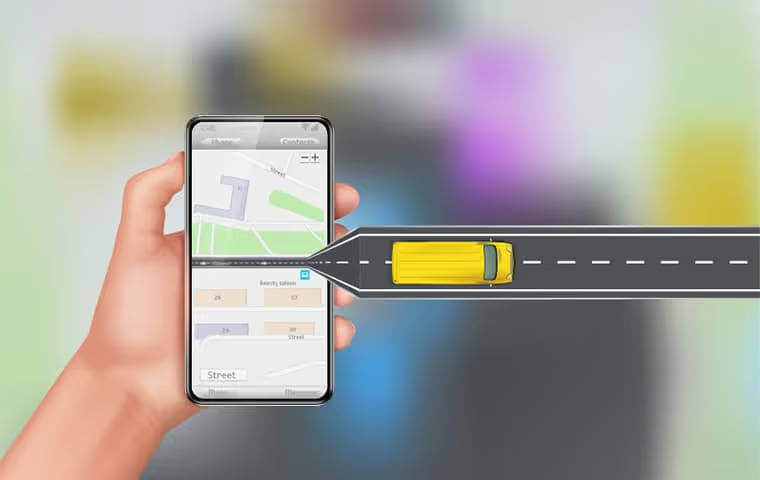
GPS fleet tracking is so much more than just dots on a map. It’s a powerful tool that gives you real-time data on vehicle location, maintenance needs, and engine status. But are you getting the full story? The most valuable insights come from data you can trust completely. This is why precise fleet gps calibration is non-negotiable. It ensures the information you and your team rely on is accurate, turning simple tracking into a true management solution. We'll cover five key ways to harness this technology and see the benefits in no time.
How GPS Fleet Tracking Technology Works
At its core, GPS fleet tracking technology is a sophisticated system that gives you a bird's-eye view of your entire fleet. It’s more than just a dot on a map; it’s a network of technologies working together to provide actionable data. This system uses the Global Positioning System (GPS), a network of satellites orbiting the Earth, to pinpoint the exact location of your vehicles. The information gathered by the GPS device in your vehicle is then transmitted through a cellular network to a central server. From there, specialized software interprets this data, presenting it to you in an easy-to-understand format through a dashboard or mobile app. This allows you to see not just where your vehicles are, but also how they're being used, helping you make smarter decisions about everything from dispatching to maintenance.
The real power of this technology comes from its ability to translate raw location data into meaningful business intelligence. For instance, knowing a vehicle's location is useful, but knowing its speed, idling time, and engine health is transformative. Modern fleet tracking solutions, like those offered by Azuga, integrate all these data points onto a single platform. This gives fleet managers a comprehensive understanding of their operations, enabling them to improve efficiency, enhance driver safety, and ensure every asset is performing at its best. The technology essentially acts as your eyes and ears on the ground, providing the visibility you need to manage your fleet effectively, no matter where your operations take you.
The Basic Process: From Satellite to Software
The journey of a single piece of location data is a perfect example of technology working seamlessly behind the scenes. It all starts with a signal. A network of satellites orbiting the planet continuously broadcasts signals, and a GPS device installed in your vehicle picks up these signals. By calculating the time it takes to receive signals from multiple satellites, the device can determine its precise location, speed, and direction of travel. According to GoFleet, "GPS tracking systems use satellites to find the exact location of vehicles, people, or items. For fleets, they help businesses keep an eye on their vehicles in real-time." This constant communication is the foundation of all the insights you receive.
Once the GPS device determines its location, the next step is to get that information to you. The device transmits the data over a cellular network to a secure central server. This server acts as the brain of the operation, collecting and processing information from all the vehicles in your fleet. Finally, this processed data is pushed to your fleet management software. Through a web dashboard or a tool like the Azuga Fleet Mobile App, you can view this information in real-time, run reports, and set up alerts. This entire process, from satellite to your screen, happens in a matter of seconds, giving you immediate access to the status of your fleet.
Key Components of a GPS Tracking System
A reliable GPS tracking system is made up of several key components that work in harmony. First is the GPS tracking device itself, a small piece of hardware installed in the vehicle that receives satellite signals and collects data. This device is connected to an antenna to ensure it can receive signals clearly. Next, a cellular network is required to transmit the collected data from the vehicle to the central server. This server is a powerful computer that stores, processes, and organizes all the incoming information from your entire fleet. Finally, specialized software is what turns all that raw data into a user-friendly interface with maps, dashboards, and reports.
As noted by GoFleet, "A GPS tracking system needs a GPS device, an antenna, a cellular network, a central computer (server), special software, and often a way to give drivers feedback." This feedback loop is a critical component that sets modern systems apart. For example, in-cab alerts can provide drivers with real-time coaching on unsafe behaviors. At Azuga, we provide an end-to-end platform where all these components are fully integrated. This ensures you have a reliable, powerful system that delivers the insights you need to manage your equipment and vehicles without having to piece together different technologies.
How a Vehicle's Location is Determined
Determining a vehicle's precise location involves more than just a single technology. While GPS satellites are the primary source of information, a robust tracking system uses a combination of methods to ensure accuracy and continuous connectivity, even in challenging environments. The system intelligently switches between or combines data from different sources to provide the most reliable location information possible. This multi-faceted approach means you won't lose visibility if a vehicle enters a tunnel, a dense urban canyon, or an underground parking garage. It’s this reliability that allows you to trust the data you’re seeing and make confident operational decisions based on it.
Satellite Signals (GPS)
The primary method for pinpointing a vehicle's location is through the Global Positioning System (GPS). This system relies on a constellation of satellites, each transmitting precise timing signals. The GPS receiver in your vehicle's tracking device listens for these signals from at least four different satellites. By measuring the time delay between when a signal is sent and when it's received, the device can calculate its distance from each satellite. This process, known as trilateration, allows the device to determine its exact latitude, longitude, and altitude. As Accurate Technologies points out, "GPS (Global Positioning System) gives very exact location information, which is super important for things like navigation, maps, and planning routes." This accuracy is fundamental for effective route optimization and dispatching.
Wi-Fi and Cell Tower Data
While GPS is highly accurate, it requires a clear line of sight to the sky. When that line of sight is obstructed, the system can use other signals to maintain a location lock. The GPS device can identify nearby Wi-Fi networks and use their known locations to estimate its position. Similarly, it can use cell tower triangulation, measuring the signal strength from multiple cell towers to calculate its location. According to GoFleet, "A GPS device in a vehicle talks to satellites to figure out its location. This information is then sent to a central computer through a cell network." This same cellular connection used for data transmission also serves as a backup for location tracking, ensuring you have uninterrupted visibility of your assets.
Understanding Fleet GPS Calibration
Implementing GPS tracking is the first step, but ensuring the systems within your vehicles are properly calibrated is just as important for safety and efficiency. Calibration is the process of fine-tuning a vehicle's electronic systems to ensure they are operating according to manufacturer specifications. This isn't just about the GPS device itself; it extends to other critical systems that modern vehicles rely on, such as the engine control unit (ECU) and Advanced Driver-Assistance Systems (ADAS). Proper calibration ensures that the data you receive is accurate and that the vehicle's safety features are functioning correctly. Neglecting calibration can lead to inaccurate reporting, reduced fuel efficiency, and, most importantly, significant safety risks for your drivers and the public.
Think of calibration as a regular health check-up for your vehicle's brain. Over time, or after certain repairs, the settings for these complex systems can drift. A simple wheel alignment or windshield replacement can throw off the sensors that control features like lane-keeping assist or automatic emergency braking. By making calibration a standard part of your scheduled maintenance program, you create a more reliable and safer fleet. It’s a proactive measure that protects your drivers, your assets, and your bottom line by ensuring every vehicle operates exactly as it was designed to. This commitment to precision is a cornerstone of a strong safety culture.
Why Your Fleet Vehicles Need Calibration
Regular calibration is essential because it directly impacts the safety and performance of your vehicles. Modern vehicles are packed with sensors that feed data to various onboard systems. If these sensors are not properly aligned and calibrated, they can provide incorrect information, leading to poor performance or system failure. For example, an uncalibrated ADAS camera might not accurately detect lane markings or obstacles on the road. As ERP SoCal warns, "Skipping calibration can lead to serious safety problems, like wrong braking, lane drifting, blind spot failures, and even another accident." These are not minor issues; they are critical failures that can have severe consequences, making routine calibration a non-negotiable aspect of fleet safety.
Engine Calibration for Improved Efficiency
Beyond safety systems, engine calibration plays a vital role in your fleet's operational efficiency and return on investment. Every engine is controlled by a computer that manages everything from fuel injection to ignition timing. Engine calibration involves optimizing these settings to suit the specific demands placed on each vehicle. A truck used for long-haul highway driving has different needs than one used for stop-and-go city deliveries. As Smart Fleet USA explains, "Engine calibration helps unlock the full potential of a fleet by making sure each vehicle's engine settings match its specific work environment and tasks." This tailored approach can lead to significant improvements in fuel economy, reduced emissions, and better overall performance, directly impacting your operational expenses.
Calibrating Advanced Driver-Assistance Systems (ADAS)
Advanced Driver-Assistance Systems (ADAS) are becoming standard in new vehicles, and they are incredibly complex. These systems use a network of cameras, radar, and sensors to power features like adaptive cruise control, blind-spot monitoring, and automatic emergency braking. However, their effectiveness is entirely dependent on precise calibration. According to ERP SoCal, "ADAS calibration is a very important safety step after many car repairs, like fixing a windshield, bumper, dents, paint, suspension, or frame." Even a minor fender bender or a simple windshield replacement can misalign these sensitive components, rendering them ineffective or, worse, causing them to behave unpredictably. Ensuring proper ADAS calibration is a critical step in upholding your commitment to driver safety.
The Safety Risks of Improper Calibration
The consequences of improper calibration are severe and cannot be overstated. When a vehicle's safety systems are not correctly calibrated, they can fail to work when needed or, in some cases, activate incorrectly. This can lead to dangerous situations on the road. The warning from ERP SoCal is worth repeating: "Improper calibration can lead to serious safety problems, like wrong braking, lane drifting, blind spot failures, and even another accident." These risks create significant liability for your business and undermine any safety initiatives you have in place. Tools like AI-powered dashcams can help monitor and correct driver behavior, but they are most effective when the vehicle's underlying safety systems are functioning perfectly. Proper calibration is a fundamental requirement for a truly safe fleet.
Gain Full Visibility Over Job Status
Dispatching is a crucial part of a fleet manager’s job. It’s how operations keep running throughout the day. However, the more vehicles you have on your fleet, the more challenging dispatching becomes. This is where fleet tracking comes in. With fleet tracking, you can map out your entire fleet, which tells you who to dispatch, where to send them, and how many vehicles you have for the jobs you need to complete.
Fleet management software from Azuga allows you to create schedules by reviewing routes and assigning drivers all from a single dashboard. It’s easier than ever to manage jobs during the day. Whenever you need to make changes, you can do so right from the dashboard. Your drivers get automatic updates, so you no longer need to scramble to get in touch with them and hope that they check their phones in time. You have all of the information you need on your drivers, their routes, and their jobs right at your fingertips, and the dispatching process is more streamlined than ever.
Find and Fix Fuel-Wasting Habits
Fuel is the most expensive cost that fleets face. And fleets are always looking for ways to cut costs. While fuel is necessary for any fleet business to continue operating, there are a couple of ways to reduce fuel costs using fleet tracking. We’ll go over two ways that you can do so here.
The first way is through route optimization. Route optimization is a tool that harnesses the power of machine learning and algorithms to find the most fuel-efficient path that includes all of your drivers’ destinations throughout the day. It makes your fleet more efficient in a variety of ways. Of course, it cuts down on time spent driving around, but it also cuts down on how much fuel your fleet uses.
Another way that fleet tracking helps minimize fuel use is by tracking driver behavior. It can detect behaviors like idling, speeding, and rapid acceleration. These behaviors waste a significant amount of your fleet’s fuel, so you want to avoid them whenever possible. Fleet tracking software can alert you whenever these actions occur, so you can intervene before they occur again. It’s amazing how much fuel you can save when you combine these two fleet tracking features!
Get Ahead of Costly Vehicle Maintenance
When your vehicles break down, it puts a massive dent in your fleet’s productivity and costs your fleet significant amounts in downtime and vehicle repairs. Mechanical failures can also put your drivers in danger, and of course, you never want to see that happen. The only way to avoid breakdowns is to engage in preventative maintenance, and fleet tracking can help you accomplish this. Fleet tracking alerts you as soon as your vehicles have issues that require attention. Telematics tracks your vehicles’ health and will tell you about problems with your vehicles’ tires, engine, or anything in between. This information helps you get your vehicle repaired before the issue causes a breakdown. It is necessary to combine fleet tracking with regular maintenance checks to conduct proper preventative maintenance.
Protect Your High-Value Assets and Vehicles
Fleet vehicle theft is one of the worst things that can happen to a business. It may seem like you’re trying everything to combat the issue, and thieves are still striking you. Luckily, fleet tracking can help. With fleet tracking, you can set up a geofence, a virtual perimeter around a specific location. When your vehicle exits this area, you’ll receive a notification alerting you. This way, when a thief takes your vehicle, you’ll know right away so you can alert the authorities and let them know exactly where to find it. This significantly increases the chances that you’ll be able to get your vehicle back.
Beyond Location: Advanced Uses for GPS Data
Modern GPS technology offers much more than just a moving dot on a map. While knowing a vehicle's location is the foundation, the real power lies in the rich data collected by telematics devices. This information provides a comprehensive view of your fleet's health, performance, and operational environment. By looking beyond simple location tracking, you can find new ways to improve efficiency, secure your assets, and prepare for the future of transportation. These systems gather details on everything from vehicle speed and fuel consumption to engine diagnostics, turning every vehicle into a source of valuable business intelligence.
Streamline Compliance and Reporting
Meeting regulatory requirements can be a complex and time-consuming task. GPS tracking systems simplify this process by automatically capturing the data needed for compliance. For instance, Electronic Logging Devices (ELDs) use GPS data to log Hours of Service (HOS) accurately, helping you avoid violations and hefty fines. The system can also track vehicle health and maintenance needs, making it easier to keep up with inspections and service schedules. This automated data collection reduces manual paperwork, minimizes human error, and ensures your reports are always accurate and up-to-date, allowing you to focus on running your business instead of managing documentation.
Asset Tracking for Valuable Equipment
Your business relies on more than just trucks and vans. Valuable equipment like trailers, generators, and heavy machinery are often left on job sites, making them vulnerable to theft or misuse. GPS technology extends beyond your vehicles to help you monitor these critical assets. By attaching small, durable tracking devices, you can keep an eye on your equipment's location at all times. This not only deters theft but also dramatically increases the recovery rate if an item does go missing. With asset tracking, you gain peace of mind knowing exactly where your high-value equipment is, whether it’s on-site, in transit, or in storage.
The Future: Vehicle-to-Everything (V2X) Communication
The world of fleet management is constantly evolving, and GPS is at the heart of the next major leap forward: Vehicle-to-Everything (V2X) communication. This technology allows vehicles to "talk" to each other and to smart city infrastructure, like traffic lights and road sensors. Imagine your trucks receiving real-time alerts about an accident ahead or a red light, allowing the driver to adjust their speed for better fuel economy and safety. Connecting vehicles to their surroundings through V2X is the future of driving, promising safer roads, less congestion, and more efficient fleet operations.
Choosing and Implementing a GPS Tracking System
Selecting and rolling out a GPS tracking system is a significant step for any fleet. The right solution can transform your operations, but a poor choice or a bumpy implementation can create headaches. The key is to approach the process thoughtfully, starting with a clear understanding of your own needs and ending with a plan that gets your entire team on board. A successful rollout isn't just about installing hardware; it's about integrating a new tool into your daily workflow and company culture in a way that everyone understands and supports.
What to Look for in a Fleet Tracking Solution
Before you start comparing providers, take some time to define what you want to achieve. Are you focused on improving driver safety, reducing fuel consumption, or streamlining dispatch? Knowing your primary goals will help you identify the features that matter most. Look for a solution that offers real-time fleet tracking, detailed reporting, and tools that align with your objectives, such as driver behavior monitoring or route optimization. Consider the scalability of the system as well—you want a partner that can grow with your business and adapt to your changing needs over time.
Steps for a Smooth System Rollout
A successful implementation starts with a clear plan. Once you've chosen a provider, work with them to schedule the installation of tracking devices across your fleet. The next step is to set up the software platform, configuring alerts, reports, and user permissions to match your operational workflow. It’s also important to test the system thoroughly to ensure everything is working correctly before going live. A good provider will assist you in connecting the new system with any existing software you use, like accounting or dispatching tools, to create a seamless flow of information across your business.
Training and Engaging Your Drivers
Your drivers are the most critical part of a successful GPS system rollout. It's essential to communicate the purpose of the new technology openly and honestly. Explain how it benefits them, from improved safety on the road to fairer performance evaluations. Provide thorough training so they feel comfortable with the system and understand how it works. To further encourage adoption, consider programs that reward safe driving habits. For example, Azuga’s Driver Rewards program uses data from the tracking system to identify and celebrate top performers, turning safety into a positive and engaging experience for the whole team.
Make Confident Decisions Backed by Data
You can obtain a plethora of data from fleet tracking. Fleet management software allows you to generate all kinds of reports providing information on vehicle health, driver behavior, asset usage, fuel usage, and more. When it comes time to make decisions for your fleet, you want to make sure you have accurate data in your hands to ensure that you are informed and confident to ensure your fleet is as successful and efficient as it can be. These insightful reports help you make the right decisions every time.
Ready to Take Control of Your Fleet?
Azuga offers state-of-the-art fleet tracking software. Our comprehensive fleet management solution covers all aspects of fleet management, from billing to safety, and you’re sure to be impressed with everything that we have to offer. Check out a demo of our software and see for yourself what we can do.
Frequently Asked Questions
What’s the difference between GPS tracking and fleet calibration? Think of it this way: GPS tracking tells you where your vehicle is and how it's being used, giving you an external view of your operations. Fleet calibration, on the other hand, is about the vehicle's internal health. It's the process of fine-tuning a vehicle's onboard computer and safety systems to make sure they are working exactly as the manufacturer intended. Both are essential for a safe and efficient fleet.
My vehicles are new. Do they really need ADAS calibration? Yes, they absolutely do. The advanced driver-assistance systems (ADAS) in new vehicles rely on a network of sensitive cameras and sensors. Calibration isn't just a one-time factory setting. A simple wheel alignment, windshield replacement, or even a minor bumper repair can knock these sensors out of alignment, which could prevent critical safety features from working correctly when your driver needs them most.
How can I introduce GPS tracking to my drivers without causing mistrust? Open communication is key. It's important to frame the technology as a tool for safety and efficiency, not surveillance. Explain how it helps with faster dispatching, provides proof of service, and automates logging to reduce their paperwork. Highlighting features like driver rewards for safe performance can also show that the system is there to recognize their good work and keep them safe on the road.
Is a system like this only useful for large, national fleets? Not at all. The core benefits of a fleet management system apply to businesses of any size. Whether you operate five vehicles or five hundred, you can see significant improvements in fuel efficiency, maintenance scheduling, and driver safety. The data helps you make smarter decisions that protect your assets and your bottom line, which is valuable for any operation.
How often do my vehicles need to be calibrated? Calibration isn't typically based on a time or mileage schedule like an oil change. Instead, it's event-driven. A vehicle needs to be recalibrated any time work is done that could affect its sensors. This includes repairs to the windshield, bumpers, suspension, or frame, as well as after a wheel alignment. It should be a standard part of the procedure for these types of repairs.
Key Takeaways
- Prioritize proper calibration: For your data to be reliable, you need to calibrate your vehicle's GPS, engine, and advanced driver-assistance systems (ADAS). This ensures accurate reporting and keeps critical safety features working correctly.
- Use GPS data for more than location: A robust tracking system helps you optimize routes, correct fuel-wasting driver habits, and get ahead of vehicle maintenance. This turns simple tracking into a complete management tool.
- Turn insights into action: Use detailed reports on vehicle health, driver behavior, and asset location to make informed operational decisions. This data gives you the confidence to manage your fleet efficiently and effectively.