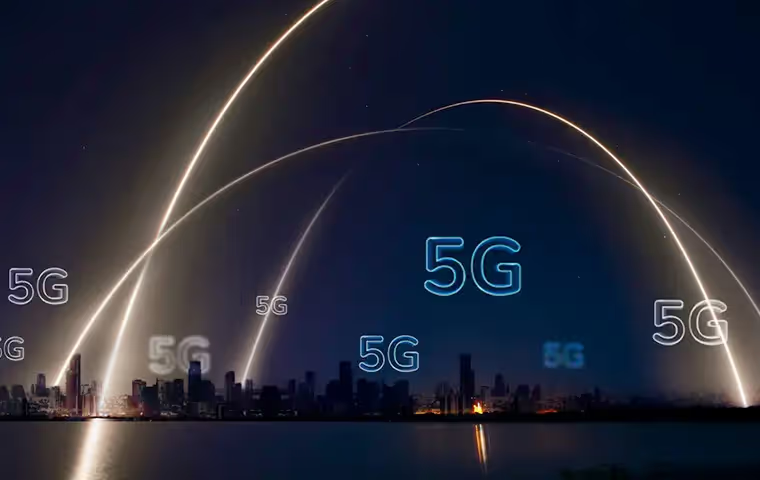
You’ve heard about 3G, 4G, and 5G for cell phones, but what do these cellular generations mean for your fleet? It’s more than just faster speeds. The jump to 5G is about preparing your operations for the future of fleet management. Technologies like AI dashcams and advanced vehicle diagnostics require a powerful connection that only 5g gps technology can provide. We'll explain the key differences between these generations and help you understand when a 5g tracker is the right choice for your business.
3G vs. 4G vs. 5G: What Fleets Need to Know
Let’s start with 3G. 3G came out as the new cellular generation in 2001. This network can reach speeds of 7.2 Mbps or megabits per second. The first cellular-connected home security systems ran on 3G, as before, they went through landlines. If you’re using a 3G device today, you can still video call and access the internet. However, your connection will be slow, and you’ll also notice that your network slows down at certain times of the day.
Meanwhile, 4G can reach network speeds of 150 Mbps. This makes it much easier to enjoy online games and high-quality videos. 4G can also be used for streaming. It was adopted in 2009 to make room for many of the cellular technologies we enjoy today. However, you may still notice that your connection slows down at peak times.
5G is the current generation of cellular technology. It can reach speeds above 1 Gbps or gigabit per second. Some estimate that it can even reach 20 Gpbs. 5G opens the door for all kinds of options when it comes to cellular technology. Think of autonomous vehicles, virtual reality, and high-definition streaming. 5G also won’t give you problems at any time of day.
How GPS Technology Works
So, how does this all connect to the GPS trackers in your fleet vehicles? It’s a common misconception that GPS and cellular data are the same thing. While they work together in a fleet management system, they are two distinct technologies. Understanding the difference helps clarify why a strong cellular network is so important for getting reliable, real-time data from your vehicles.
The Role of Satellites
GPS stands for Global Positioning System. It’s a network of about 31 satellites constantly orbiting the Earth. Your vehicle’s GPS device has a receiver that listens for signals from these satellites. To determine its precise location, the device needs to receive a signal from at least four of them. By calculating the time it takes for each signal to arrive, the receiver can pinpoint its exact latitude, longitude, and altitude. This is the fundamental technology that makes modern fleet tracking possible, allowing you to see where every vehicle is at any given moment.
GPS vs. Cellular Data
Here’s the key difference: a GPS device can determine its location without any internet or cell service. It communicates directly with the satellites. However, for you to see that location on your computer or phone, the data needs to be sent from the vehicle back to you. That’s where the cellular network comes in. The GPS device uses the 4G or 5G network to transmit its location data to the Azuga platform. Think of it this way: GPS finds the location, and the cellular network reports it back to you through the Azuga Fleet Mobile App.
Understanding GPS Accuracy
The effectiveness of any fleet management solution depends on the accuracy of its location data. If you’re trying to dispatch the nearest driver to a job or verify that a delivery was made on time, you need to trust the information you’re seeing. While GPS technology is incredibly precise, its accuracy can be influenced by a few different factors. Knowing what affects it can help you better interpret the data you receive from your fleet.
Factors Affecting Accuracy
A GPS signal is a radio wave, and like any radio wave, it can be blocked or distorted. Physical obstructions are the most common cause of interference. Tall buildings in dense urban areas, tunnels, and even heavy tree cover can temporarily weaken or block the signal. However, advancements in technology are constantly improving reliability. The speed and stability of 5G networks, for example, ensure that once a GPS signal is received by the device, that data is transmitted back to your dashboard almost instantly. This makes the vehicle tracking you see more dependable and accurate in real-time.
Is It Time to Upgrade to 5G Fleet Tracking?
The short answer is no (for now).
5G is excellent for online gaming, high-definition streaming, and video conferencing. That’s because it’s meant to transmit a lot of data in a short amount of time. However, modern GPS devices are data-efficient. This means that implementing 5G may be overkill right now. Not to mention, 5G coverage doesn’t exist everywhere yet.
However, this does not mean a 5G tracker won’t be beneficial in the future. The networks are expanding, and new GPS technology may be right around the corner.
Beyond Location: The Advantages of 5G for Fleets
While 4G is perfectly capable for current GPS tracking needs, the future of fleet management will certainly be shaped by 5G. This next-generation network offers more than just faster speeds; it unlocks a new level of connectivity and data processing that will change how fleets operate. As the technology becomes more widespread, its advantages will become essential for staying competitive and efficient. Let's look at the key benefits 5G is set to deliver for fleet operations.
Real-Time Data from Advanced Sensors
One of the biggest impacts of 5G is its ability to transmit data almost instantly. This low latency makes vehicle tracking incredibly accurate and reliable, providing true real-time updates. For a fleet manager, this means making quicker, more informed decisions, whether for dispatching the nearest vehicle to an emergency job or providing customers with precise delivery ETAs. This technology will also support more advanced sensors, like AI dashcams, by allowing them to send high-quality video and data without delay, offering a clearer picture of what’s happening on the road.
Instant Communication for Critical Operations
With 5G, vehicles can communicate directly with each other and with smart city infrastructure, like traffic lights. This concept, known as V2X (Vehicle-to-Everything), is a game-changer for driver safety and efficiency. Imagine a vehicle automatically receiving a warning about a hazard around a blind corner from another vehicle, or traffic signals adjusting in real-time to ease congestion. This level of instant communication helps create smoother traffic flow, reduces time spent idling, and ultimately makes the roads safer for everyone.
Paving the Way for Future Fleet Technology
Think of 5G as the foundation for the next wave of fleet innovation. It’s the technology that will make widespread autonomous vehicles, advanced robotics in logistics, and highly sophisticated AI-driven management platforms possible. While these technologies might seem distant, building a fleet strategy that anticipates this shift is smart. Adopting 5G-ready hardware ensures your operations are prepared to integrate these future solutions seamlessly, from smarter route optimization to predictive maintenance alerts based on massive datasets.
Improved Power Efficiency and Battery Life
A practical and immediate benefit of 5G is its improved energy efficiency. Devices designed for 5G networks consume less power, which means longer battery life for trackers and sensors. This is especially important for asset tracking, particularly on equipment and trailers that don’t have their own power source. Longer battery life translates to less maintenance, lower replacement frequency, and more reliable tracking, ensuring you always have visibility over your valuable assets without constant battery swaps.
What to Look for in a 5G GPS Tracker
Your fleet needs the best when it comes to GPS technology; after all, these trackers are the backbone of fleet management as a whole. Azuga’s state-of-the-art fleet tracker is only part of a comprehensive fleet management solution covering all aspects of the business. This tracker installs in just 20 seconds and operates in real-time, meaning you’ll always have up-to-date data on your vehicles’ location, telematics, and more. Our fleet tracking solution can help you achieve your goals, no matter what they are. Schedule a demo with one of our experts to discuss how we can accomplish your goals with Azuga’s fleet management solution.
Key Features of Modern GPS Trackers
When you're evaluating GPS trackers, it's about more than just a dot on a map. The latest devices are packed with features designed to give you a complete picture of your fleet's operations, safety, and security. These trackers leverage newer cellular networks to provide data that is not only accurate but also delivered instantly. This allows you to make informed decisions on the fly, from rerouting a driver to checking on a high-value asset. Understanding these key features will help you choose a solution that truly supports your business goals and protects your investments.
Driver and Vehicle Monitoring
At its core, a modern GPS tracker provides real-time location data, but its capabilities go much further. With the speed of 5G technology, the accuracy and reliability of this data have significantly improved, allowing for near-instant updates. This means you can see exactly where your vehicles are at any moment, monitor their speed, and track engine diagnostics like idling time and fuel consumption. This level of insight is the foundation of effective fleet tracking and management, helping you improve efficiency, verify service calls, and ensure your drivers are on the right track throughout their day.
Advanced Security Features
Protecting your vehicles and equipment from theft is a top priority. Modern GPS trackers come equipped with advanced security features to give you peace of mind. For instance, many devices include a backup battery that keeps the tracker operational even if a thief disconnects the vehicle's main power source. This ensures the device can continue sending location updates, greatly increasing the chances of recovery. These features are essential for safeguarding your most valuable assets, whether they are trucks, trailers, or heavy machinery, and are a key component of a robust asset management strategy.
Performance and Battery Life
A tracker is only useful if it's powered on and transmitting data. For assets that don't have a constant power source, like trailers or certain types of equipment, battery life is a critical factor. Many modern battery-powered trackers are designed for longevity, with some lasting up to 10 days or more on a single charge. This long battery life ensures you have a continuous, reliable stream of location data without needing to constantly manage the devices. It provides the dependability needed to keep tabs on all your equipment, ensuring nothing gets left behind or lost on a busy job site.
Types of GPS Tracking Devices
Not all assets are the same, so not all trackers should be, either. The right type of GPS device depends on what you’re tracking and how it’s used. The two main categories are wired-in trackers, which are permanently installed in a vehicle, and battery-powered trackers, which offer more flexibility. Each type has distinct advantages suited for different applications within your fleet, from the trucks your drivers use every day to the expensive equipment that moves from one site to another. Choosing the right mix ensures you have complete visibility across all your operations.
Wired-In vs. Battery-Powered Trackers
Wired-in trackers are connected directly to a vehicle's battery, providing a constant source of power. These devices are typically small and can be discreetly installed under the dashboard, making them a secure and tamper-resistant option for your primary fleet vehicles. In contrast, battery-powered trackers are self-contained and don't require any wiring, making them perfect for assets that lack their own power source. You can easily attach them to trailers, containers, and heavy machinery, making them an ideal solution for equipment management. The flexibility of battery-powered units allows you to track valuable assets that might otherwise be vulnerable.
Understanding Service Plans
The GPS tracking device itself is just one piece of the puzzle. To transmit location data and other important information from the field back to your office, the tracker needs to connect to a cellular network. This connection is enabled through a service plan, which is an essential part of any fleet tracking solution. This plan is what allows you to see real-time updates, receive alerts for events like speeding or geofence breaches, and run reports on historical data. The service plan transforms the hardware from a simple location device into a powerful management tool that provides actionable insights for improving driver safety and operational efficiency.
Frequently Asked Questions
Do I need to upgrade my fleet's GPS trackers to 5G right now? For most fleets, the answer is no, not immediately. Current 4G networks are more than capable of handling the data that modern GPS trackers transmit. While 5G is incredibly powerful, its main advantage is handling large amounts of data, which is more than what's needed for today's location tracking. However, it's smart to keep 5G on your radar as future technologies, like advanced AI dashcams, will rely on its speed.
What's the difference between GPS and the cellular network? It's a common point of confusion, but they are two separate technologies that work together. The GPS device in your vehicle communicates with satellites orbiting the Earth to determine its exact location. The cellular network (like 4G or 5G) is what the device uses to send that location data back to your fleet management platform. So, GPS finds the location, and the cellular network reports it to you.
Will my GPS tracker stop working if it loses cell service? Your GPS tracker will continue to know its location even without cell service because it can still receive signals from GPS satellites. However, it won't be able to transmit that location data to you in real-time. Most modern trackers are designed to store this data and will send all the updates once a cellular connection is re-established, so you won't have gaps in your historical records.
Why is 5G considered the future of fleet management if 4G is good enough for now? While 4G handles current needs well, 5G opens the door for a new level of fleet technology. Its ability to transmit massive amounts of data with almost no delay will support advanced AI dashcams, vehicle-to-vehicle communication for safety alerts, and even autonomous vehicles. Think of 5G as the foundation that will support the next generation of smarter, safer, and more efficient fleet operations.
What should I look for in a modern GPS tracker besides its network connection? A great tracker does more than just report its location. Look for advanced security features, such as a backup battery that keeps the device running even if vehicle power is cut. For assets like trailers or unpowered equipment, consider the tracker's battery life to ensure you get reliable data without frequent maintenance. The goal is to get a complete picture of your fleet's health, security, and performance.
Key Takeaways
- GPS finds the location, cellular sends the data: A tracker uses satellites to pinpoint its position, but it needs a cellular network like 4G or 5G to transmit that data to your dashboard. While 4G is great for location updates, 5G is built to handle the larger data loads from technologies like AI dashcams.
- Plan for 5G, even if you don't need it today: For standard GPS tracking, 4G networks are perfectly capable. However, the future of fleet management, including vehicle-to-everything (V2X) communication and advanced AI, will depend on 5G's speed and reliability, making it a key consideration for long-term strategy.
- Modern trackers offer more than location: When choosing a GPS device, consider features that improve security and operational insight. This includes backup batteries for theft recovery, real-time vehicle diagnostics, and flexible battery-powered options for tracking valuable equipment and trailers.