As a commercial auto insurer, you need control. Control over how you assess risk, price your premiums, and manage your clients. That’s exactly what our fleet insurance solutions are designed to provide. So, what is Azuga? We give you the tools to easily and accurately assess the true, day-to-day risk of every driver in your commercial fleet portfolio. This means you get a clear, data-driven view of your operations, allowing you to manage risk with confidence and build stronger client relationships.
What is Fleet Insurance?
If your business relies on a group of vehicles, managing individual insurance policies for each one can be a serious administrative headache. Fleet insurance simplifies this by covering multiple vehicles—whether they're cars, vans, or heavy-duty trucks—under a single, unified policy. According to Geotab, this approach is designed to "make it easier to manage than having separate policies for each vehicle." Instead of juggling different renewal dates, payment schedules, and coverage details, you have one comprehensive plan that covers your entire fleet, streamlining your operations and giving you a clearer picture of your coverage.
How Does Fleet Insurance Work?
The core benefit of fleet insurance is its simplicity. Instead of numerous individual policies, you have one master policy that you can tailor to your business needs. This gives you flexibility in how you manage your drivers and vehicles. You can opt for an "any driver" policy, which allows any authorized employee to operate any vehicle in the fleet. Alternatively, you can assign specific drivers to specific vehicles, which might be preferable for specialized equipment. This centralized approach means one renewal date, one premium payment, and a single point of contact for claims or questions, making your insurance management much more efficient.
Who Qualifies for Fleet Insurance?
You might think fleet insurance is only for massive corporations with hundreds of vehicles, but it's often accessible to much smaller businesses. While the exact number varies between insurance providers, many will offer a fleet policy to businesses with as few as two to five vehicles. This makes it a viable option for a wide range of companies, from local service providers to regional distributors. If your business operates a group of vehicles for its daily operations, it's worth exploring whether you qualify for a fleet policy.
Types of Businesses That Benefit from Fleet Insurance
Fleet insurance is particularly valuable for industries where vehicles are essential to operations. Think about construction companies with trucks and heavy equipment, HVAC or plumbing businesses with service vans, or landscaping companies with multiple crews on the road. It's also a great fit for delivery services, sales teams that travel frequently, and logistics companies. As noted by H.I. Commercial Hull, businesses like these find fleet insurance especially beneficial because it consolidates their risk management and simplifies administrative tasks, allowing them to focus on their core services.
Fleet Insurance vs. Individual Commercial Policies
Choosing between a single fleet policy and individual policies for each vehicle comes down to efficiency and potential savings. With individual policies, you're managing separate paperwork, payments, and renewals for every vehicle. A fleet policy consolidates all of this into one package. Furthermore, insuring vehicles in a group can often lead to more favorable per-vehicle premiums, especially for businesses with a strong safety record and a low claims history. This approach not only saves administrative time but can also be a more economical way to insure your entire fleet of commercial vehicles.
Understanding Fleet Insurance Coverage Options
Fleet insurance isn't a one-size-fits-all solution. Policies are highly customizable to match the specific risks your business faces. While you can tailor your coverage, most standard fleet policies are built on a foundation of common protections. These typically include liability, physical damage, and coverage for uninsured motorists, among others. Understanding these core components is the first step in building a policy that truly protects your assets, your employees, and your business operations. Let's break down the most common types of coverage you'll encounter.
Automobile Liability
This is the cornerstone of any vehicle insurance policy. Automobile liability coverage protects your business if one of your drivers is at fault in an accident that causes injury to another person or damages their property. It typically covers medical expenses, legal fees, and repair or replacement for the other party's vehicle or property. Given the potential for high-figure claims in serious accidents, having adequate liability limits is critical for protecting your business from significant financial exposure and legal complications.
Physical Damage
While liability covers damage to others, physical damage coverage protects your own vehicles. This is especially important because your fleet is a significant business asset. This coverage is usually broken down into two main categories: collision and comprehensive. Together, they provide broad protection against the most common causes of vehicle damage, ensuring you can get your vehicles repaired and back on the road quickly after an incident, minimizing downtime and operational disruptions.
Collision Coverage
Collision coverage specifically pays for repairs to your fleet vehicle if it's damaged in a crash with another vehicle or an object, like a guardrail or a building. It applies regardless of who is at fault in the accident. For businesses that depend on their vehicles every day, this coverage is essential for ensuring that an accident doesn't sideline a critical asset for an extended period, helping you maintain business continuity.
Comprehensive Coverage
Comprehensive coverage handles damage from non-collision events. This includes things like theft, vandalism, fire, hail, or hitting an animal. It’s the part of your policy that protects your vehicles from the unexpected. For fleets that operate in areas prone to severe weather or have vehicles parked in unsecured locations overnight, comprehensive coverage provides an essential layer of financial protection against a wide range of potential losses.
Uninsured and Underinsured Motorist Coverage
What happens if your driver is in an accident caused by someone with no insurance or not enough insurance to cover the damages? That's where uninsured and underinsured motorist (UM/UIM) coverage comes in. This protection steps in to cover your fleet's repair bills and your driver's medical expenses if the at-fault party can't pay. It’s a crucial safeguard that ensures your business isn't left with the financial burden of an accident it didn't cause.
Medical Payments and Personal Injury Protection (PIP)
This coverage, often called MedPay or PIP depending on your state, helps pay for medical expenses for your driver and any passengers in your vehicle after an accident, regardless of who was at fault. It can cover things like hospital bills, doctor visits, and rehabilitation. Providing this coverage ensures your employees get the care they need promptly after an incident, which is a key part of any responsible driver safety program.
Cargo Coverage
If your business transports goods, materials, or equipment, cargo coverage is a must-have. This specialized insurance protects the contents of your vehicles against damage or theft while in transit. Whether you're a delivery service carrying packages, a construction company hauling expensive tools, or a logistics firm moving client products, cargo coverage ensures that the value of what you're carrying is protected, safeguarding both your and your clients' financial interests.
Hired and Non-Owned Auto (HNOA)
Your standard fleet policy typically only covers vehicles your business owns. Hired and Non-Owned Auto (HNOA) coverage extends your liability protection to vehicles you use for business but don't own. This includes short-term rentals or employees' personal cars used for work errands. HNOA is a critical addition for many businesses, as it closes a common insurance gap and protects you from liability claims arising from accidents in these non-owned vehicles.
Factors That Influence Fleet Insurance Premiums
The amount you'll pay for fleet insurance isn't arbitrary; it's calculated based on a detailed assessment of your fleet's unique risk profile. Insurers look at a variety of factors to determine the likelihood of a claim and the potential severity of a loss. These elements range from the industry you operate in to the driving records of your employees. Understanding these key factors can help you identify areas where you can make operational improvements to present a lower risk profile to insurers, which can have a positive impact on your premiums.
Industry and Business Operations
The nature of your business plays a significant role in determining your insurance rates. An industry like long-haul trucking, which involves long hours on the road and heavy vehicles, naturally presents a higher risk than a local florist making deliveries in a small van. Insurers will look at your typical operations—how far you travel, what you transport, and the environments you operate in—to assess the level of risk associated with your daily activities and adjust your premiums accordingly.
Vehicle Types and Usage
The makeup of your fleet is another critical factor. Insurers will consider the type, age, and value of your vehicles. A fleet of new, heavy-duty trucks will have different insurance implications than a fleet of older, light-duty vans. They'll also analyze vehicle usage, including annual mileage and purpose. Vehicles that are on the road constantly will have more exposure to risk than those used sparingly for local errands, and this difference in usage will be reflected in your premiums.
Driver Records and Experience
Your drivers are the human element of your fleet's risk profile, and their history behind the wheel is a major consideration for insurers. Insurance providers will review the Motor Vehicle Records (MVRs) of your drivers, looking for past accidents, traffic violations, or license suspensions. A team of experienced drivers with clean records is seen as a much lower risk than a team with a history of incidents. This is why hiring safe drivers and maintaining a strong fleet safety culture is so important.
Geographic Location and Routes
Where you operate matters. A fleet that primarily drives in dense, high-traffic urban areas faces a higher statistical risk of accidents compared to a fleet operating in quiet, rural regions. Insurers analyze factors like traffic patterns, weather conditions, and crime rates (like vehicle theft) in your primary areas of operation. The specific routes your vehicles take can also influence your premiums, as some roads and highways are known to be more hazardous than others.
Claims History
Your past performance is often seen as an indicator of future risk. Insurers will carefully review your business's claims history over the last several years. A fleet with a long record of frequent or severe claims will likely face higher premiums than a fleet with a clean history. Demonstrating a consistent commitment to safety and a low incidence of claims is one of the most effective ways to secure more favorable terms from your insurance provider.
Your Policy's Deductible
A deductible is the amount of money you agree to pay out-of-pocket for a claim before your insurance coverage kicks in. The level of deductible you choose has a direct impact on your premium. Generally, selecting a higher deductible will result in a lower premium, as you are agreeing to take on a larger portion of the financial risk yourself. It's a balancing act between your upfront payment and your potential out-of-pocket expense in the event of a claim.
How to Lower Insurance Premiums
While many factors that influence insurance premiums are fixed, there are several proactive steps you can take to manage them effectively. By focusing on safety, smart shopping, and leveraging technology, you can demonstrate to insurers that your fleet is a well-managed, low-risk operation. These strategies not only help in securing better insurance terms but also contribute to a safer, more efficient, and more profitable business overall. Taking control of your risk management is a powerful way to influence your fleet's financial health.
Establish a Fleet Safety Program
A formal fleet safety program is one of the most impactful ways to reduce risk and, in turn, lower your insurance premiums. This program should include clear safety policies, regular driver training on topics like defensive driving, and a system for scheduled vehicle maintenance to ensure all vehicles are in safe working order. A well-documented safety program shows insurers that you are serious about preventing accidents, which can make you a more attractive client and lead to more favorable rates.
Compare Quotes from Multiple Providers
Insurance is a competitive market, and not all providers will assess your fleet's risk in the same way. It's always a good idea to shop around and get quotes from several different insurers that specialize in commercial fleets. This allows you to compare coverage options and terms to find the policy that best fits your business's specific needs and budget. Don't just look at the bottom line; consider the provider's reputation for claims service and their understanding of your industry.
Bundle Your Business Policies
Many insurance providers offer a wide range of business insurance products, not just fleet coverage. If you need other types of insurance, such as general liability or property coverage, consider purchasing them from the same provider that handles your fleet insurance. Insurers often provide discounts for bundling multiple policies, which can lead to significant savings across all your business insurance needs. This also simplifies your administrative work by consolidating your policies with a single company.
Install Safety and Anti-Theft Devices
Modern technology offers powerful tools for improving fleet safety and reducing insurance premiums. As Geotab notes, "Sharing this data can show insurers you run a safe fleet, leading to lower costs." Installing telematics devices like GPS trackers provides valuable data on driver behavior, such as speeding or harsh braking. This information allows you to coach drivers and prove your commitment to safety. Additionally, anti-theft devices can reduce the risk of vehicle loss, further strengthening your risk profile.
Using AI Dashcams to Demonstrate Safe Driving
AI dashcams take safety technology a step further by providing objective, video-based evidence of what happens on the road. In the event of an accident, footage from a dual-facing AI dashcam can quickly establish fault, protecting your drivers from false claims and potentially saving you from hefty liability payouts. More importantly, this technology can be used to proactively identify risky behaviors and provide targeted driver coaching. Sharing this data with your insurer is a powerful way to demonstrate your fleet's commitment to safety, which can be a key factor in securing better insurance terms.
What Are Azuga's Fleet Insurance Solutions?
Assess and price risk accurately
Wouldn’t it be great if your agents could complete their ACORD apps with more complete and accurate data, without depending only on customer responses? Are you settling for pricing risk based on where customers garage their vehicles?
Azuga provides information on where vehicles go daily, driver behavior, and driver routing. These are substantially different risks; you should use debits and credits accordingly. Azuga lets you do this with accurate, verified data, so guessing is unnecessary.
Expand your low-risk client base and intervene with riskier fleets
Offering Azuga with your policy allows you to keep and attract safer fleets. You can grow topline revenue and bottom-line profits on commercial auto insurance.
By better understanding the true risk associated with your commercial fleet base, you can price policies to serve mid- or high-risk clients profitably. Equipping your customers with Azuga Fleet arms them with powerful tools to take control of their fleet. They can increase safety and decrease the driving behaviors that raise both their exposure to loss and their operating costs.
Enhance your renewal process
Do you ask your insureds or agents to complete a yearly questionnaire? Did the insured add vehicles or take on clients outside their typical routes such that substantially changed annual mileage? Did the business grow or shrink dramatically? All this data could be in your hands before asking a single question. You can avoid misunderstandings and ensure your customers pay the correct premiums.
Augment your clients’ safety program and loss control measures
Azuga Fleet functions like Driver Rewards, DriveSafe, driver scores, distracted driving reports, unauthorized use reports and event alerts will strengthen your clients’ loss prevention measures. Social aspects of Driver Rewards become important during weekly safety meetings, as they turn safe driving into a competition among workers.
Add business value for your client base
Along with risk reduction, Azuga Fleet helps fleet organizations to significantly reduce costs and improve service levels. These improvements allow them to compete more successfully.

How Azuga Uses Telematics to Improve Fleet Insurance
The commercial auto insurance industry is going through a fast transformation. It is increasingly turning to telematics-driven programs for data to assess and price risk more accurately. These programs are no longer experiments. They are a competitive advantage for companies that roll them out.
Azuga is a connected vehicle platform that lets insurance companies tap into telematics and behavioral data. The software improves rating segmentation by using verified data instead of estimates. Our insurance solutions help you differentiate your offering and let you bundle in our award-winning fleet solutions that use gamification, driver safety and rewards, and clear reports, making it easy for your customers to operate more competitively and with less risk.
Getting Started with Azuga's Fleet Insurance Solutions
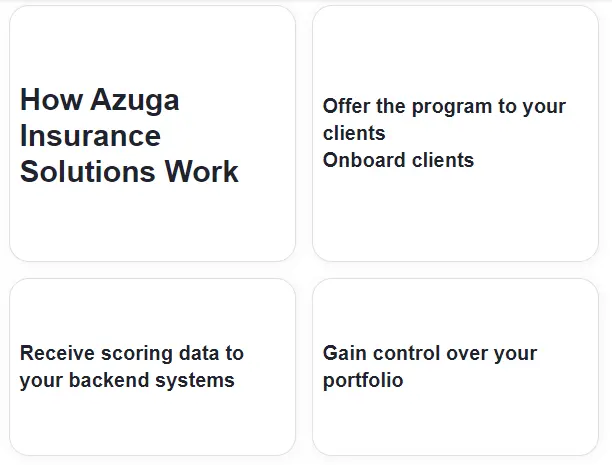
Our insurance solutions leverage Azuga Fleet. This award-winning telematics solution is used by over a thousand fleets in North America, South America, the United Kingdom, Europe and India.
- Offer the program to your clients. You can create a white label or endorse an existing Azuga offering. Either way, we make it easy with templates for email outreach, brochures, FAQs, and presentations. An Azuga Fleet expert dedicated to your business will assist in presenting the program and answering questions.
- Onboard clients. Azuga will coordinate with you, getting clients signed up and operational on Azuga Fleet, including training and setup.
- Receive scoring data to your backend systems. As clients use Azuga Fleet, we push driver behavior and event data through a gamification and scoring engine. This gives you an easy way to categorize drivers and fleets into risk categories.
- Gain control over your portfolio. The tools and intelligence that Azuga Fleet offers help fleet businesses manage driver safety and operations at a whole new level. While they are improving their operations, you’ll optimize the management ofyour portfolio of clients and price your policies.
How Does Azuga Help Lower Your Insurance Premiums?
- Demonstrate safety
- Prevent theft
- Maintain vehicles
Insurance providers want to know that you are keeping your vehicles and drivers in great shape and as safe as possible. Telematics is the best way to do this. Simply installing a telematics system is often enough to earn an insurance discount, but if not, you have other options.
Azuga’s rigorous reporting gives you the data you need to prove your fleet’s safe behavior on the road and the regular maintenance of your vehicles. When your insurance providers see this, you will have more evidence to back up lowering your premiums.
Related Resources
Why Insurance Company Risk Assessments are Important
April 30th, 2021
Fleet data management is an integral part of a fleet manager’s job. Learn how to harness data for your fleet’s productivity.
7 Reasons to Choose Azuga Insurance Options for Your Fleet
July 27th, 2020
Azuga improves driving behaviors and the severity of accidents and reduces frequency by over 50% on average. Use reliable telematics software like Azuga to ensure the best auto insurance options.
How to Save Money on Fleet Insurance in 2022
October 27th, 2022
There are many technology options and safety solutions that can help you save money on fleet insurance. Many fleets have noticed the cost of insurance premiums has been rising over the past years. This means that saving money on fleet insurance is now more critical than ever. Luckily, we have some tips on how to do precisely that.
Why Insurance Company Risk Assessments are Important
Insurance providers need to understand the level of risk they’re taking on with each policy, and for fleet managers, this means demonstrating that your vehicles and drivers operate as safely as possible. Telematics is the most effective way to provide this proof. Instead of relying on questionnaires or historical data alone, a system like Azuga offers real-time, verifiable information about driver behavior, vehicle location, and maintenance status. Our detailed reporting gives you the exact data you need to show your provider that your fleet follows safety protocols and that your vehicles are well-maintained, building a strong case for better insurance terms and a more transparent partnership.
7 Reasons to Choose Azuga Insurance Options for Your Fleet
Partnering with an insurance provider that uses Azuga gives your fleet a significant advantage. It’s not just about coverage; it’s about creating a safer, more efficient operation that is recognized and rewarded. Here are a few key benefits:
- Show your commitment to safety. Using telematics proves to insurers that you are proactive about risk management.
- Reduce accidents. Our platform helps correct unsafe driving behaviors, which can reduce accident frequency by over 50% on average.
- Access powerful tools. You get more than just data; you get a full fleet management solution to improve operations.
- Motivate your team. The Azuga Driver Rewards program uses friendly competition to encourage safer driving habits.
- Protect against false claims. AI Dashcams provide video evidence to exonerate drivers in incidents that weren’t their fault.
- Streamline maintenance. Keep vehicles in top condition with automated maintenance schedules and alerts.
- Gain a competitive edge. A safer, more efficient fleet is a more profitable one.
How to Save on Fleet Insurance
With insurance premiums on the rise, finding ways to manage this operational expense is more important than ever. Technology offers practical solutions to help you secure more favorable terms. By implementing a comprehensive fleet safety program built around telematics, you can create a culture of safety that insurers value. This includes monitoring for risky behaviors like speeding or harsh braking and using that data for targeted driver coaching. Proving your vehicles are well-cared-for through detailed scheduled maintenance logs also helps reduce your risk profile. Ultimately, the data gathered from these systems provides concrete evidence of your fleet's low-risk operation, giving you leverage during policy discussions.
Frequently Asked Questions
How many vehicles do I need to qualify for fleet insurance? You might be surprised to learn that you don't need a massive fleet to get this type of policy. While every insurance provider has its own guidelines, many will offer fleet insurance to businesses with as few as two to five vehicles. It's a very accessible option for many small and medium-sized companies, so it's always worth asking about if you operate more than one vehicle for your business.
What happens if an employee gets into an accident while using their personal car for a work errand? This is a great question because it highlights a common gap in coverage. Your standard fleet policy typically only covers vehicles owned by your business. To protect yourself from liability in this situation, you need what's called Hired and Non-Owned Auto (HNOA) coverage. It's a specific addition to your policy that extends protection to vehicles you use for work but don't own, like employee cars or short-term rentals.
Besides safe driving, what else can I show my insurer to get better terms? Demonstrating a strong safety culture goes beyond just driver behavior. A well-documented vehicle maintenance program is another powerful way to show insurers you are serious about managing risk. Keeping detailed records of regular service, inspections, and repairs proves that your vehicles are in safe, working order. This proactive approach to asset management can positively influence how an insurer views your fleet's overall risk profile.
How exactly does a telematics system help during the insurance renewal process? Telematics provides verified, objective data that can streamline your renewal conversations. Instead of filling out questionnaires based on estimates, you can present your insurer with precise reports on actual mileage, typical routes, and vehicle usage patterns. This information gives them a clear and accurate picture of your fleet's operations, which helps ensure your policy and its premium are based on your true risk, not just industry averages.
Are AI dashcams just for proving who was at fault in an accident? While they are incredibly valuable for providing clear evidence after an incident, their biggest benefit is in preventing accidents from happening in the first place. AI dashcams can identify risky behaviors like distracted driving or tailgating as they occur. This creates immediate opportunities for you to coach your drivers and reinforce safe habits, making them a proactive safety tool, not just a reactive one.
Key Takeaways
- Streamline your insurance management: A single fleet policy covers all your commercial vehicles, simplifying paperwork and renewals compared to managing individual plans for each vehicle.
- Demonstrate your commitment to safety: Implementing a formal safety program, keeping up with vehicle maintenance, and using tools like AI dashcams shows insurers that you actively manage risk, which can lead to more favorable policy terms.
- Leverage data for an accurate risk profile: Telematics solutions provide insurers with verifiable data on driver behavior and vehicle health, allowing for a more precise risk assessment for well-managed fleets.